How to Tell a Horse’s Age by Its Teeth (Simple Guide)
Never look a gift horse in the mouth.” You have heard it, but do you know why? Because a horse’s teeth reveal its age, and checking them was the old way to judge a horse’s value. Let’s see how it works.
Why Teeth Show Age
Horse teeth keep erupting from the gum throughout life, and the surface wears down as the horse chews. The shape, wear, and angle of the teeth change in predictable ways, so experienced people can estimate age. Remember that it is an estimate, not a birth certificate.
The Early Years
- Newborn to a few months: foals get “milk” (baby) teeth, including the first incisors.
- About 2½ years: the first permanent central incisors come in.
- About 3½ years: the next pair of permanent incisors arrive.
- About 4½ years: the corner incisors erupt.
- Around 5 years: the horse is said to have a “full mouth” of permanent incisors.
Male horses also develop small canine teeth (“tushes”) at about 4 to 5 years.
The Middle Years
After age 5, estimating gets harder. Vets and horse people look at:
- Cups: small dark indentations on the chewing surface of the incisors. They gradually wear away, starting with the lower front teeth, over several years.
- Dental star: a dark line that appears on the chewing surface of the incisors as the cups disappear.
- Shape of the chewing surface: it moves from oval to rounder to more triangular with age.
The Older Years
- Galvayne’s groove: a vertical groove that appears on the upper corner incisor, often around age 10. It is said to reach halfway down the tooth at about 15 and the full length at around 20, and then it may start to fade. This is a classic guide but not very exact.
- Angle of the incisors: as horses age, the front teeth tend to slope outward, becoming longer and more forward.
How Long Do Horses Live?
Many horses live into their mid-20s to 30s, and a few live longer, depending on breed, care, and genetics. Good nutrition, dental care, exercise, and regular vet visits all help.
Why It Is Only an Estimate
Diet, genetics, bedding, vices like cribbing, and dental care change how teeth wear. Two horses of the same age can look different. For official documents or buying decisions, ask a vet, and combine teeth with other evidence like papers and history.
Why Dental Care Matters
- Floating: horse teeth can develop sharp points. A vet or equine dentist files them down (called floating), often once a year, depending on the horse.
- Signs of trouble: dropping feed, weight loss, head tossing, bad smell, or resisting the bit.
- Older horses may need softer feed, such as soaked pellets.
Safety Tip
Do not stick your hand in a horse’s mouth if you are not trained. Let a vet or experienced handler do dental checks, and keep fingers clear of the cheek teeth.
Conclusion
A horse’s teeth tell a story, from foal to senior. They give a good estimate of age, but regular dental care is just as important for health and comfort.
FAQ
1. At what age do horses get all their adult incisors?
Around 5 years, often called a “full mouth.”
2. What is Galvayne’s groove?
A groove on the upper corner incisor that appears around age 10 and is used as a rough age guide.
3. Is teeth-based age exact?
No. It is an estimate, and wear varies by diet and care.
Image file name: how-to-tell-a-horses-age-by-its-teeth.webp
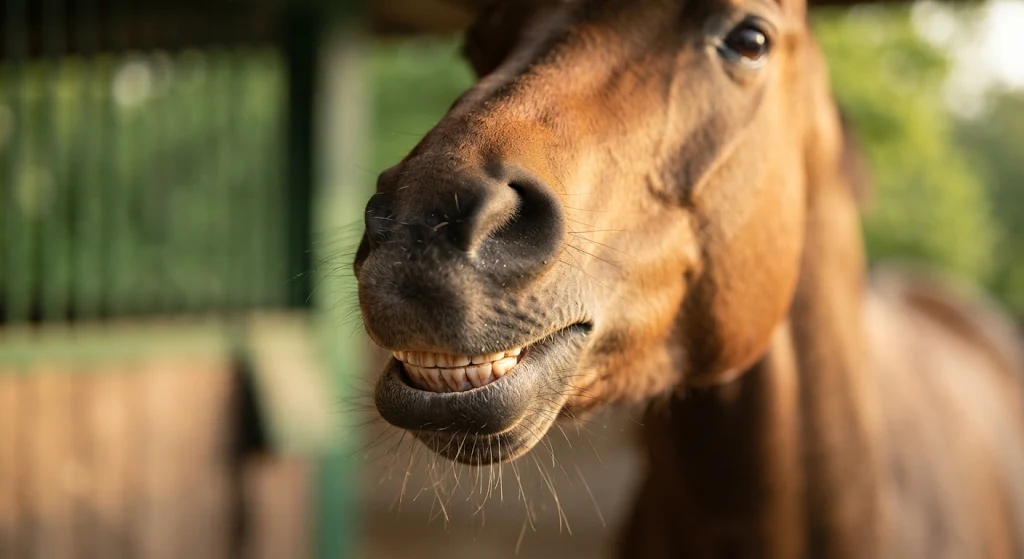
Alt text: Close-up of a horse’s front teeth and gently parted lips in soft light