Avocado Banana Almond Smoothie: Nutrition and Benefits
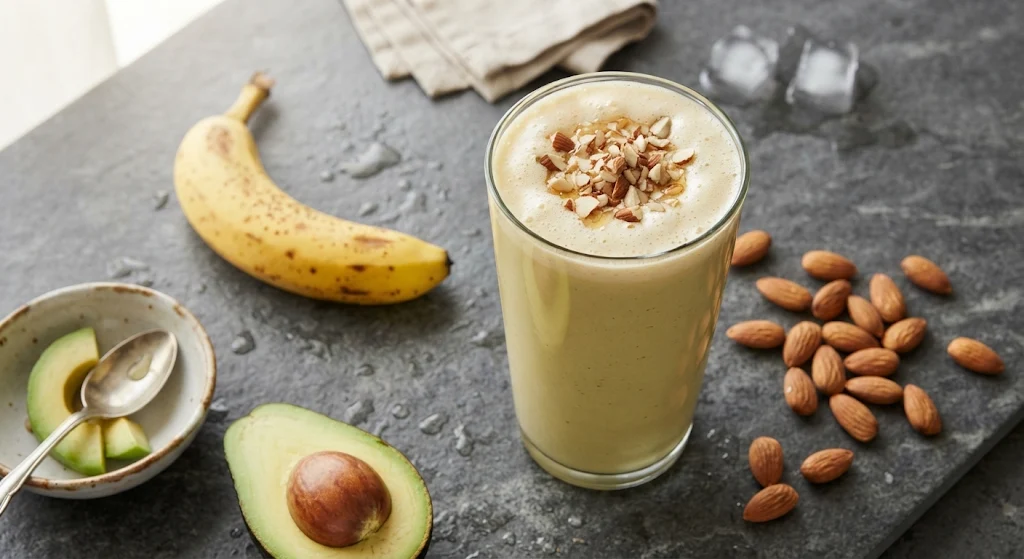
Some drinks feel more like a meal than a drink. A thick, creamy smoothie made with ripe avocado, a spotted banana, and a handful of almonds is one of them. It is smooth, lightly sweet, and filling, and it takes about five minutes to blend. It also happens to bring together healthy fats, fiber, potassium, and plant protein in one glass.
This guide to the avocado banana almond smoothie covers the recipe, the nutrition of every ingredient with no tables (just simple lists you can read easily on a phone), the possible health benefits, and why many people like to drink it in the morning. All values are typical averages from USDA FoodData Central and are approximate.
Why This Combination Works
Each ingredient has a clear job in the glass.
- Avocado gives the smoothie its creamy, almost milkshake-like texture, along with healthy unsaturated fat and fiber.
- Banana adds natural sweetness, potassium, and quick-digesting carbohydrates, so you rarely need added sugar.
- Almonds add plant protein, vitamin E, magnesium, and a mild nutty flavor.
- Milk thins the blend and adds protein and calcium. Plant milks also work.
Together they make a drink that is satisfying without being heavy, and it works as a quick breakfast, a snack, or a post-workout drink.
Ingredients
Makes 2 glasses (about 300 ml each).
- 1 medium ripe avocado (about 150 g of flesh)
- 1 medium ripe banana (about 118 g peeled), fresh or frozen
- 28 g raw almonds (a small handful, about 23 almonds)
- 1½ cups (360 ml) whole milk, or milk of your choice
- 4 to 5 ice cubes
- Optional: 1 teaspoon honey or 1 pitted date, and a pinch of cinnamon
- To top: 1 tablespoon chopped almonds
Nutrition by Ingredient
Here is what each ingredient contributes to the whole recipe.
Avocado (150 g of flesh)
- Calories: about 240 kcal
- Protein: about 3.0 g
- Fiber: about 10.1 g
- Main value: healthy fats, fiber, and potassium (about 730 mg)
Banana (1 medium, 118 g)
- Calories: about 105 kcal
- Protein: about 1.3 g
- Fiber: about 3.1 g
- Main value: carbohydrate energy and potassium (about 420 mg)
Raw almonds (28 g)
- Calories: about 164 kcal
- Protein: about 6.0 g
- Fiber: about 3.5 g
- Main value: plant protein, vitamin E (about 7 mg), and magnesium (about 76 mg)
Whole milk (360 ml)
- Calories: about 224 kcal
- Protein: about 11.6 g
- Fiber: 0 g
- Main value: protein and calcium (about 410 mg)
Total for the whole recipe
- Calories: about 733 kcal
- Protein: about 21.9 g
- Fiber: about 16.7 g
Per serving (half of the recipe)
- Calories: about 367 kcal
- Protein: about 11 g
- Fiber: about 8.4 g
Values are approximate and vary by brand, size, and preparation. This information is for general reference and is not medical or dietary advice.
How Much Protein Is in It?
A glass made with whole milk provides about 11 g of protein. Most of it comes from the milk (about 5.8 g per glass) and the almonds (about 3 g per glass), while avocado and banana add smaller amounts.
If you use unsweetened almond milk instead of dairy milk, the protein per glass drops to about 4 to 5 g, and calories fall by roughly 100 kcal per glass. Soy milk lands in between, with about 6 to 7 g of protein per cup. To raise protein further, some people add plain yogurt or a scoop of protein powder. So the amount depends on what you choose.
Carbohydrates, Fats, and Fiber
Carbohydrates. They come mainly from the banana and the milk. Banana provides both natural sugar and some fiber, so it is digested more gradually than refined sugar, especially when blended with fat and protein.
Fats. Avocado and almonds provide mostly monounsaturated fat, the type commonly associated with the Mediterranean eating pattern. Whole milk adds a modest amount of saturated fat. Using semi-skimmed milk or a plant milk lowers it.
Fiber. At about 8.4 g per glass, this smoothie provides a good share of fiber. Public health guidelines often mention around 25 to 30 g per day for adults, so one glass can contribute meaningfully. Blending does not remove fiber.
Vitamins and Minerals
This smoothie is a source of several nutrients:
- Potassium (about 575 mg per glass from avocado and banana): contributes to normal muscle and nerve function.
- Vitamin E (from almonds and avocado): an antioxidant that contributes to protecting cells from oxidative stress.
- Magnesium (from almonds and avocado): contributes to normal energy metabolism and muscle function.
- Folate and vitamin C (from avocado): folate contributes to normal cell division, and vitamin C contributes to normal immune function.
- Vitamin B6 (from banana): contributes to normal protein and energy metabolism.
- Calcium and vitamin B12 (from dairy milk): contribute to bones and the nervous system.
Potential Benefits
When it is part of a balanced diet, this smoothie may support:
- Heart-friendly eating. Unsaturated fats, fiber, and potassium are all nutrients that appear in heart-healthy eating patterns. Nuts and avocado are widely studied in this context.
- Digestive comfort. The fiber contributes to normal digestive function.
- Steady energy. Fat, protein, and fiber slow digestion compared with a drink made only of fruit and sugar.
- Fullness. The combination can keep you satisfied for longer than juice would.
- Nutrient variety. It gives you vitamins, minerals, and plant fats in one easy drink.
These are general benefits of nutritious foods, not treatments or guarantees. No single drink determines health outcomes.
Why Is It Popular in the Morning?
Mornings are often rushed, and a smoothie fits that reality. In plain terms:
- It is fast. Five minutes, one blender, and you can drink it on the go.
- It balances macronutrients. It provides carbohydrates for energy, protein, fat, and fiber together, rather than sugar alone.
- It is easy to digest. Many people who don’t feel hungry early prefer a drink to solid food.
- It can be adapted. You can adjust sweetness, thickness, and protein to taste.
Breakfast is not essential for everyone, and some people feel fine eating later. The smoothie is simply a convenient option for those who like a morning meal.
Step-by-Step Instructions
1. Prepare the ingredients
Cut the avocado in half, remove the pit, and scoop the flesh into the blender. Peel the banana and break it into pieces. If your almonds are hard and your blender is not very strong, soak them in water for 2 to 4 hours or overnight and drain them.
2. Add the liquid
Pour in the milk, then add the almonds, ice, and any optional sweetener or cinnamon.
3. Blend
Blend on high for 45 to 60 seconds, until smooth and creamy. Stop and scrape the sides if needed.
4. Adjust the texture
For a thinner smoothie, add a splash of milk. For a thicker one, add more ice or use a frozen banana.
5. Serve
Pour into two glasses and sprinkle with chopped almonds. Drink right away for the best color and texture.
Tips for a Smooth, Creamy Result
Use a very ripe banana. Brown spots mean more sweetness, so you can skip the honey.
Choose a ripe avocado. It should yield slightly when pressed. Hard avocado makes a gritty, bitter smoothie.
Blend the almonds first. Blend them with the milk for 30 seconds before adding the other ingredients to break them down completely.
Freeze the banana. Slices of frozen banana make the drink thick and cold without much ice.
Add a squeeze of lemon. A teaspoon of lemon juice keeps the green color brighter and slightly lifts the flavor.
Drink it fresh. Avocado begins to oxidize and darken after a while.
Easy Variations
- Dairy-free: Use unsweetened almond, oat, or soy milk.
- Higher protein: Add ½ cup of plain Greek yogurt or a scoop of protein powder.
- Chocolate version: Add 1 tablespoon of unsweetened cocoa powder.
- Peanut or almond butter: Replace the whole almonds with 1 tablespoon of almond butter for a smoother texture.
- Spinach boost: Add a handful of fresh spinach. The flavor stays mild.
- Spiced: Add cinnamon, cardamom, or a drop of vanilla extract.
- Lighter: Use half an avocado and a splash more milk.
Storage and Make-Ahead Tips
This smoothie is best fresh, but you can plan ahead.
- Refrigerator: Store it in a sealed jar filled to the top, to limit contact with air, for up to 24 hours. Expect some color change and separation, so shake well before drinking.
- Freezer: Pour into ice cube trays or freezer bags for up to 2 months. Blend the cubes with a splash of milk to rebuild the texture.
- Smoothie packs: Pre-portion avocado, banana, and almonds in freezer bags. In the morning, add milk and blend.
- Food safety: Don’t leave a dairy-based smoothie at room temperature for more than 2 hours. Wash the avocado skin before cutting, since the knife can carry surface bacteria to the flesh.
Who Should Be Careful
- Nut allergy: Almonds are a tree nut. People with a nut allergy should avoid this recipe or choose a different base.
- Dairy intolerance or allergy: Use a plant milk and check labels.
- Kidney conditions: Avocado, banana, and almonds are high in potassium, so people advised to limit potassium should ask a doctor or dietitian.
- Blood thinners: Avocado contains vitamin K. Anyone taking warfarin or similar medication should check with a healthcare professional.
- Calorie awareness: At about 367 kcal per glass, this is a substantial drink. It is not a low-calorie option, so portion size matters.
- Blood sugar concerns: Banana and milk contribute carbohydrates. People who monitor blood sugar should seek personal guidance.
Simple Ways to Enjoy It
- As a quick breakfast with a slice of whole grain toast.
- After exercise, with extra yogurt or protein.
- As an afternoon snack, in a smaller glass.
- Poured into a bowl and topped with sliced banana, nuts, and seeds as a smoothie bowl.
- Frozen into popsicle molds for a creamy dessert.
Conclusion
The avocado banana almond smoothie is creamy, simple, and nutritionally balanced. A glass gives you roughly 367 kcal, about 11 g of protein with dairy milk, and about 8 g of fiber, along with potassium, vitamin E, magnesium, and mostly unsaturated fats.
Use ripe fruit, blend until smooth, and choose the milk that suits you. It is a convenient morning option, but it works best as part of a varied diet and not as a miracle drink. Check allergies and medical conditions before adding it to your routine.
Source reference: USDA FoodData Central. Values are typical averages and are approximate.
This article is for general information only and is not medical or dietary advice. Consult a qualified healthcare professional for personal guidance.
FAQ
1. How much protein is in an avocado banana almond smoothie?
About 11 g per glass when made with whole dairy milk. With unsweetened almond milk it is about 4 to 5 g, and with soy milk about 6 to 7 g. Adding yogurt or protein powder raises it.
2. How many calories does it have?
About 367 kcal per glass with whole milk, and about 733 kcal for the full recipe. Plant milks and a smaller avocado lower the total.
3. Is it good to drink in the morning?
It is a convenient, balanced option that gives carbohydrates, protein, fat, and fiber in a quick drink. Whether to eat breakfast at all depends on your preferences and needs.
4. Why does my smoothie taste bitter or gritty?
This usually means the avocado was underripe or the almonds were not blended well. Use a fully ripe avocado, soak the almonds, and blend for at least 45 seconds.
5. Can I make it without milk?
Yes. Use water, coconut water, or any plant milk. Water gives a lighter drink with less protein and fewer calories, so you may want to add yogurt or a spoonful of almond butter for creaminess.