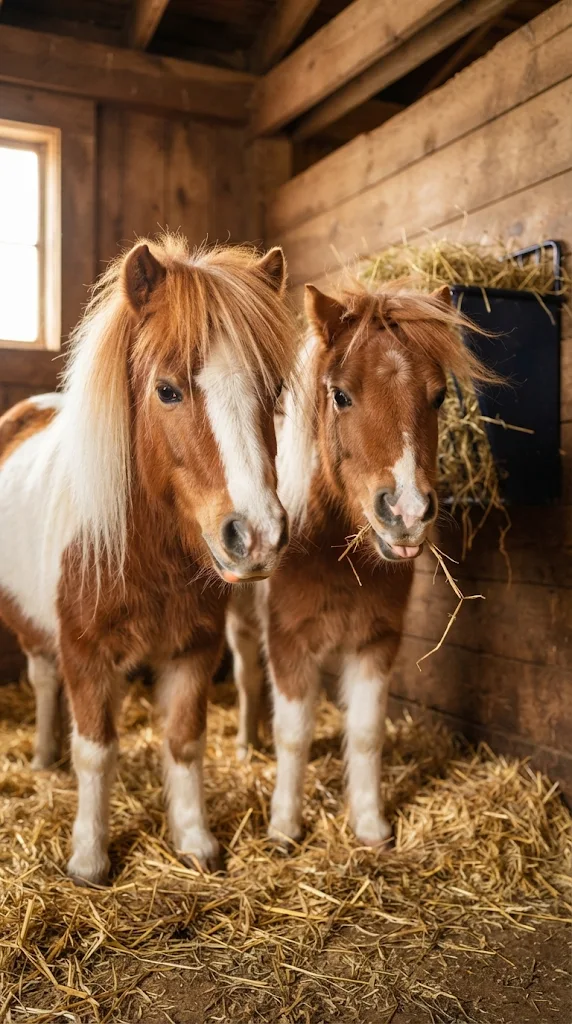
Miniature Horses at Running Springs: Katie’s Tiny Herd
Some animals have a way of stealing the show, and the miniature horses at Katie Van Slyke’s Running Springs farm are definitely among them. Recently, a post showed two adorable pinto minis side by side, munching hay, with a playful question for followers: which one is Regina and which one is Penelope? The comments filled up in minutes, and it got me thinking about how much there is to love about these tiny horses.
This is an unofficial fan guide to the breed behind the cuteness: what miniature horses are, how they are registered, how big they get, and what it takes to care for them. Everything here is based on public information.
What Is a Miniature Horse?
A miniature horse is a small horse, not a pony and not a foal. They have the proportions of a full-size horse, just in a much smaller package. The breed most often called “miniature horse” in the United States is the American Miniature Horse, bred for its small size, friendly temperament, and refined look.
Miniature horses are intelligent, curious, and social. Many are gentle and enjoy human company, which is one reason they are so popular on small farms, in 4-H and show programs, and as companion animals.
How Big Are They?
Size is the defining feature, and it is measured at the withers, the high point of the back at the base of the neck.
- AMHA (American Miniature Horse Association): horses must measure 34 inches (86 cm) or less at the withers.
- AMHR (American Miniature Horse Registry): divides miniatures into two divisions. Division A is up to 34 inches (86 cm), and Division B is over 34 and up to 38 inches (86 to 97 cm).
Typical weights are roughly 150 to 250 pounds (68 to 113 kg), depending on height and build. For comparison, a full-size horse is often 1,000 pounds or more.
AMHA vs. AMHR: What’s the Difference?
Both are registries, and some horses are registered with one or both.
- AMHA is known for its stricter height limit and for focusing on a particular type of conformation.
- AMHR is a more inclusive registry that accepts two height divisions.
- Dual registration means a horse qualifies for both.
This is visible right on the farm. Katie has explained that Karen is registered with both AMHA and AMHR, while Janice is registered only with AMHR. If you have ever wondered what those letters mean next to a mini’s name, that is it. katievanslyke
The Mini Crew at Running Springs
Running Springs is best known for its American Quarter Horses, but the farm is also home to a lively group of smaller animals. Katie is known for raising a huge variety of animals, from Quarter Horses to famous mini Highland cows. katievanslyke
Here is what has been shared publicly about the mini horses:
- Regina: one of the best-known minis. The farm’s blog followed her during breeding season, when “all eyes” were on her. katievanslyke
- Karen: dual registered, with royal mini bloodlines, and a sire named Nighthawk, a legendary name in the mini horse world. Her registered name is Los Arboles Silver Hawk. katievanslyke
- Janice: registered with AMHR, with the registered name Hills Sweet Melissa. She is the mother of Jack, who will be dual registered as Running Springs Jack on the Roxx, a nod to his sire ERL Cutty Roxx the House. katievanslyke
Naming is part of the charm. Katie has noted that miniature horse names often include the breeder’s prefix, much like “RS” is used for her Quarter Horses. katievanslyke
A Long Wait for a Tiny Colt
Mini fans remember the farm’s first mini colt. After more than 340 days of waiting, the mare finally delivered on her own terms. That is about 11 months, which is a typical gestation length for horses of any size. Even though the babies are tiny, the pregnancy is not any shorter. katievanslyke
Colors and Patterns
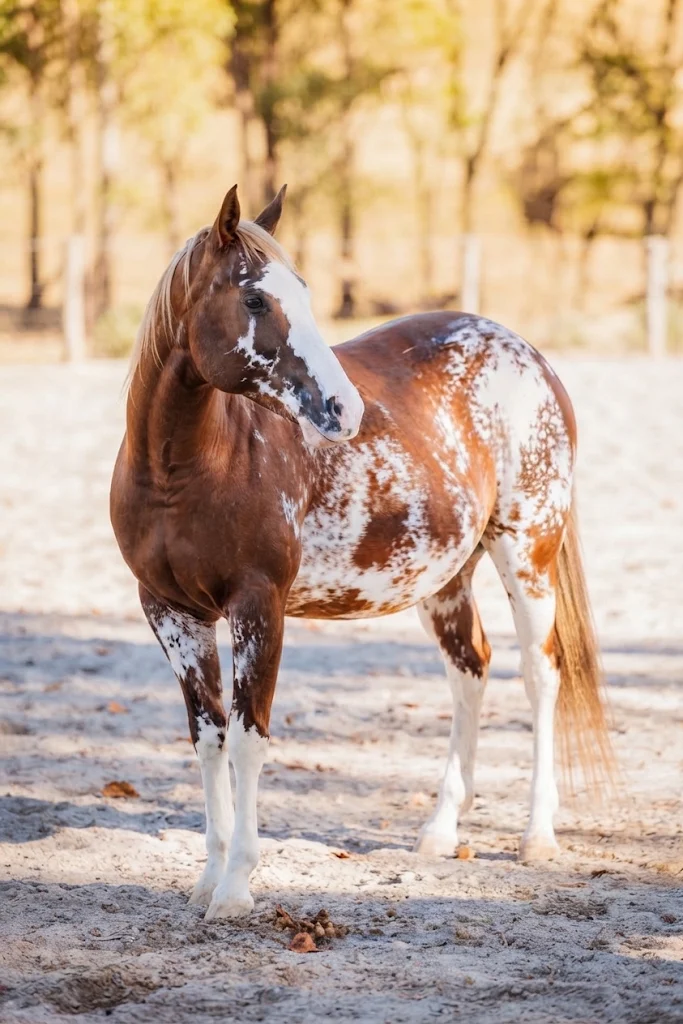
Minis come in nearly every color a full-size horse does, including bay, black, chestnut, palomino, and roan. The two in the photo are pinto (also called paint), meaning they have large patches of white and a second color, here a warm chestnut. Pintos are among the most eye-catching patterns, and every one is unique, which is why guessing names in a photo is so hard.
Look at the faces for clues:
- One has a wide white blaze down the face.
- The other has a small white snip on the nose, and a funny hay-snacking expression.
No two minis look exactly alike, and that is part of the fun.
Temperament
Most minis are friendly, curious, and sociable. Many love attention and learn quickly, though they can also be stubborn and mischievous. Because of their size, they sometimes get away with things that a larger horse could not, and owners need to be consistent about manners from the start.
Caring for a Miniature Horse
Minis are small, but they are real horses with real needs.
- Forage first. A mini’s diet should be built around good hay or pasture. Because they gain weight easily, portions and access to rich grass need to be managed.
- Watch the weight. Obesity is one of the most common health issues in miniature horses and is linked to problems such as laminitis and metabolic disease. A veterinarian can help check body condition.
- Dental care. Small mouths can have crowded teeth, so regular dental exams are important.
- Hoof care. Regular trimming by a farrier, about every 6 to 8 weeks for many horses.
- Shelter and space. Safe fencing, shade, and shelter, with room to move.
- Companionship. Horses are herd animals, so minis should not live alone.
- Routine vet care. Vaccinations, deworming plans, and annual checkups.
- Safety with children. Minis are not suitable for riding by adults, and small children should always be supervised.
With good care, many minis live into their late 20s or 30s, which can be longer than larger horses.
What Minis Do
Minis are used for many things:
- Companions and pets
- Showing, in halter and performance classes
- Driving, pulling small carts
- Therapy visits, where their gentle nature shines
- Breeding programs, such as the one at Running Springs
- Farm entertainment and farm ambassadors
Why Fans Love Them
There is something about a tiny horse munching hay that makes everyone smile. Minis show that horses do not have to be big to have big personalities, and following a farm that shares both its large and small animals gives us a front-row seat to the whole story.
Conclusion
The miniature horses at Running Springs, including Regina, Karen, Janice, and the rest of the tiny crew, are a reminder of how charming this breed is. They are small in size and big in character, and registered through organizations such as AMHA and AMHR.
So, what do you think? Can you tell which is Regina and which is Penelope?
This is an unofficial fan article based on publicly available information. It is not affiliated with or endorsed by Katie Van Slyke or Running Springs.
FAQ
1. How tall is a miniature horse?
AMHA minis are 34 inches (86 cm) or less at the withers, and the AMHR also registers a second division up to 38 inches (97 cm).
2. Are miniature horses ponies?
No. They are small horses with horse proportions, although they are often confused with ponies.
3. How long do miniature horses live?
Often into their late 20s or 30s with good care.
4. Do miniature horses need a lot of food?
They need much less than a full-size horse, and are prone to weight gain, so portions and quality matter. A veterinarian can advise.
5. What do AMHA and AMHR mean?
They are the American Miniature Horse Association and the American Miniature Horse Registry, two registries for miniature horses.