Can Horses Cry? What Their Tears Really Mean
You look into your horse’s big, dark eye and see a tear rolling down its face. Your heart sinks. Is it sad? Is it crying? It is one of the most common questions horse lovers ask, and the answer is more interesting than a simple yes or no.
Do Horses Shed Tears?
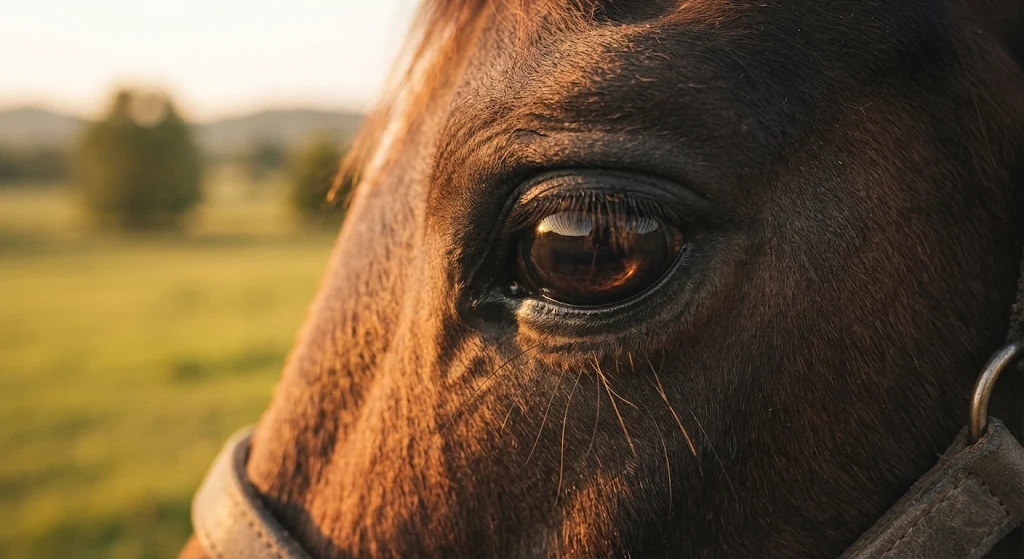
Yes, horses produce tears, as people do. Tears keep the eye moist, wash away dust, and protect the surface of the eye. Normally, the extra fluid drains through a small channel called the nasolacrimal duct, which runs from the corner of the eye to the inside of the nostril. This is why you rarely see a healthy horse’s face wet.
Do Horses Cry From Emotion?
Humans are one of the few species known to produce tears in response to emotions. For horses, there is no solid scientific evidence that they cry tears of sadness or joy. That doesn’t mean horses don’t feel. Research suggests horses experience stress, fear, comfort, and social bonds. They simply show them in other ways.
How Horses Show Emotion Instead
- Ears: pinned back for anger or discomfort, forward and soft for curiosity.
- Eyes: a soft eye means relaxed, while a wide eye with white showing suggests fear.
- Lips and muzzle: a loose lip looks relaxed, tight lips suggest stress.
- Voice: nickers for greetings, calls for separation.
- Posture and movement: tension, pacing, or a lowered head.
- Heart rate and behavior changes: studies use them to measure stress.
Why Is My Horse’s Eye Watering?
A wet face usually has a physical cause, not an emotional one. Common reasons include:
- Dust, wind, or flies irritating the eye
- A blocked tear duct, which makes tears spill over the face
- Allergies or mild infection
- A scratch or ulcer on the surface of the eye
- Foreign object, such as a seed or hay dust
- Sunlight sensitivity
- Uveitis, an inflammation inside the eye, in some horses
When to Call a Veterinarian
Eye problems can get worse fast. Call a vet promptly if you see:
- Squinting or holding the eye closed
- Cloudiness, redness, swelling, or a bluish tint on the eye
- Thick, yellow, or green discharge
- Tearing that doesn’t improve or affects only one eye
- Rubbing the eye on the leg or fence
- Sensitivity to light
Do not put human eye drops or ointments in a horse’s eye unless a vet advises it.
Everyday Eye Care
- Check the eyes daily when you groom.
- Use a fly mask with UV protection in fly season, if suitable.
- Keep stalls and hay as dust-free as possible.
- Wipe the face gently with a clean, damp cloth.
- Remove hazards, like sharp branches or protruding nails.
Conclusion
Horses may not cry tears of emotion, but they are far from emotionless. Learn their ears, eyes, and body language, and treat a watering eye as something worth checking. Your horse will always tell you something, just not through tears.
FAQ
1. Do horses cry when they are sad?
There is no strong evidence that horses cry tears from emotion. They show feelings through body language and behavior.
2. Why does one eye water more than the other?
It often points to a physical cause, like irritation, a blocked tear duct, or an injury. Ask a vet.
3. Is a watery eye an emergency?
It can be, especially with squinting, cloudiness, or swelling. When in doubt, call your vet.