Recipient Mares Explained: Meet Ariel and Her Special Foal
A recent post from Katie Van Slyke introduced followers to “pretty Ariel,” a mare with a striking chestnut-and-white coat and a very special job. Ariel is a recip mare, and she is carrying a foal by Good Better Best out of Kat Tails R Blazing, due on February 11th. The post made me want to look closer at what a recipient mare is, why this foal is so exciting, and why Ariel’s own color won’t be the foal’s color.
This is an unofficial fan guide based on public information and the caption of the post.
Meet Ariel
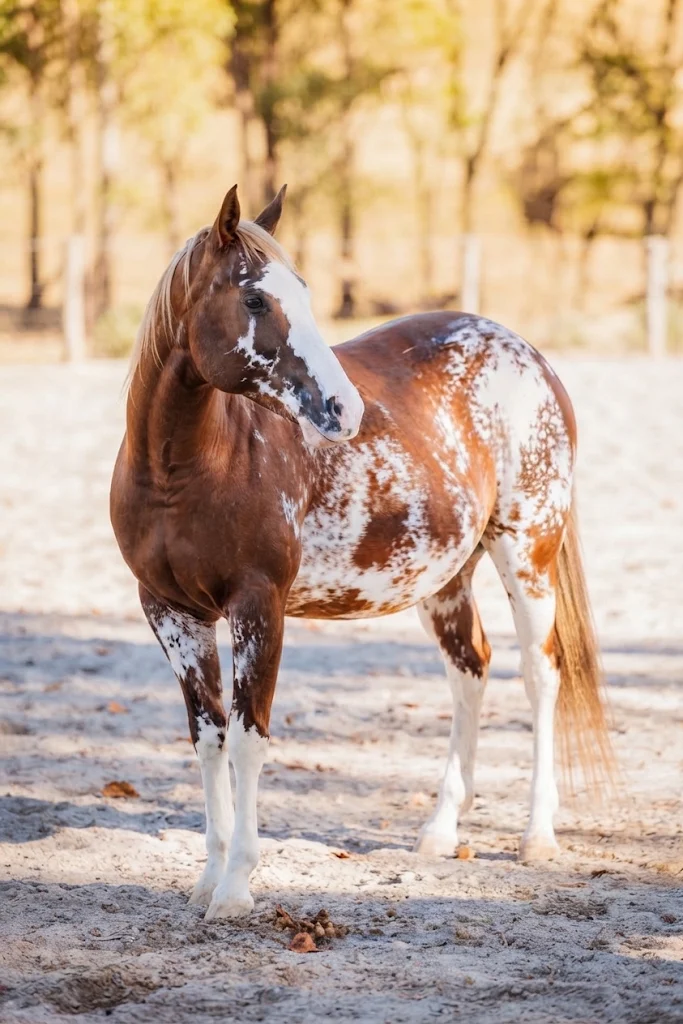
Ariel is a paint-patterned mare. In the photo she has a chestnut-brown body splashed with white, a wide white bald face, white lower legs, and speckled white patches over her sides and hindquarters. Her tail is pale and flaxen, and she stands calmly in the sun with her ears forward. She looks relaxed, healthy, and ready for the months ahead.
What Is a Recipient Mare?
A recipient mare, or “recip,” is a mare who carries a foal that is not genetically hers.
Here is how it works. The genetic material comes from the donor mare and the stallion, and the recipient mare provides the environment in which the embryo develops into a healthy foal. katievanslyke
Step by step, in simple terms:
- The donor mare is bred. She is inseminated with semen from the chosen stallion.
- An embryo forms. About a week after ovulation, a veterinarian gently flushes the embryo from the donor’s uterus.
- The recipient is prepared. Her cycle must be synchronized with the donor’s, so her uterus is ready.
- The embryo is transferred. It is placed into the recipient’s uterus.
- Pregnancy is checked. A vet confirms it with ultrasound, and later with heartbeat checks.
- The recip carries the foal. A horse pregnancy lasts around 11 months, roughly 340 days.
- The foal is born and raised by the recipient, who becomes its mother in every way that matters day to day.
The farm uses these methods regularly. Running Springs has described using embryo transfers and even ICSI, a more advanced technique, as part of its breeding program. katievanslyke
Why Do Breeders Use Recip Mares?
- Keep a champion mare in competition. A show mare can keep working while another mare carries her foal.
- Retired or injured mares can still contribute. At Running Springs, a beloved broodmare named Beyonce retired from carrying her own foals after an injury, but still contributes to the farm’s legacy through embryo transfers. katievanslyke
- More than one foal per year. A donor can produce several embryos in a season, each carried by a different recipient.
- Protect the donor’s health. Carrying foals every year takes a toll, and some mares do better as donors.
- Preserve valuable genetics. This includes using techniques such as ICSI when semen is limited.
What Makes a Good Recipient Mare?
It is not about pedigree, but about suitability. At Running Springs, recipient mares are carefully selected for reproductive health, temperament, and physical attributes. A good recip is typically: katievanslyke
- Healthy and reproductively sound
- Calm and easy to handle
- A good, attentive mother
- Of suitable size, so she can carry and deliver the foal comfortably
- Reliable at foaling
The farm has named several recipient mares over the years, including Gracie, Happy, Maggie, Willow, Raven, and Ethel. Recip mares are the quiet heroes of many breeding programs. katievanslyke
The Foal: Good Better Best x Kat Tails R Blazing
The pairing in Ariel’s belly has a lot of interest behind it.
The dam: Kat Tails R Blazing. Fans know her as Trudy. She is an NSBA World Champion. One page on Katie’s site also refers to her as “Cat Tails Are Blazing.” katievanslykekatievanslyke
The sire: Good Better Best, an American Quarter Horse stallion.
This cross has worked before. A 2021 sorrel gelding by Good Better Best out of Kat Tails R Blazing, bred by Katheryn Van Slyke, has competed in AQHA junior hunter under saddle classes. Another recipient mare, Willow, was reported to be carrying a Trudy and Good Better Best foal, which would make that foal a full sibling to Hank, Katie’s best performer, and Daphne, her yearling. aqhakatievanslyke
If Ariel’s foal arrives as planned, it will be a full sibling to those horses, which means the same sire and the same dam. Fans love seeing how siblings are alike or different.
Will the Foal Look Like Ariel?
This is the fun part. No, not because of Ariel. A foal’s color and markings come from its genetic parents, here the sire and the dam, and not from the mare who carries it. So even though Ariel has a bold, paint-patterned coat, her foal will not inherit it from her.
What the foal does get from the recipient is a good start: a healthy uterine environment, her milk, and her early guidance in the herd.
Understanding Paint Patterns
Ariel’s coat is a lovely chance to learn some color vocabulary.
- Pinto describes a color pattern: large patches of white plus another color.
- Paint (with a capital P) is generally used for the breed registered by the American Paint Horse Association, which has Quarter Horse bloodlines and specific pattern rules.
- Tobiano patterns are typically rounded patches that cross the back, with white legs.
- Overo patterns often have irregular, jagged-edged white, often with a white face and a colored back.
- Sabino and splash patterns have white on the legs, belly, and face.
- Tovero mixes both.
Ariel has a mix of white face, white legs, and speckled white sides, and exact classification can need genetic testing. Her paperwork, if any, would tell the full story.
Caring for a Pregnant Mare in Winter
For a February foal, a mare needs extra attention:
- Regular veterinary checks, including ultrasound and heartbeat checks.
- Appropriate nutrition, with feed adjusted in late pregnancy as advised by a vet.
- Vaccinations and deworming on a veterinary schedule.
- Shelter from cold, wet weather and a clean, dry foaling stall.
- Gentle exercise and turnout, as the vet allows.
- Close monitoring near the due date. Many farms use cameras, and some mares need extra support.
- A ready plan, including a veterinarian’s number for emergencies.
Due dates are estimates, since foals can arrive early or late, so the farm watches each mare closely.
Why Followers Love Foaling Season
There is something special about following a mare through her pregnancy: the heartbeat checks, the due date countdown, the first udder development, and finally the new foal standing on wobbly legs. Recip mares like Ariel deserve as much applause as the champions whose names go on the registration papers.
Conclusion
Ariel is a pretty, paint-patterned recip mare carrying a foal by Good Better Best out of Kat Tails R Blazing, due February 11th. She is a reminder that a recipient mare is more than a surrogate: she is a healthy, calm, caring mother who makes modern breeding possible. Soon, we will all find out what color and personality her foal brings.
This is an unofficial fan article based on publicly available information and the caption of a post by Katie Van Slyke. It is not affiliated with or endorsed by her or Running Springs.
FAQ
1. What is a recipient (recip) mare?
A mare who carries a foal that is genetically from a different donor mare and a stallion, through embryo transfer.
2. Will Ariel’s foal look like her?
No. The foal’s color and traits come from its sire and dam, not from the mare who carries it.
3. How long is a horse pregnant?
Around 11 months, roughly 340 days, though it can vary by several days or more.
4. Who is Kat Tails R Blazing?
A mare nicknamed Trudy by followers, who is an NSBA World Champion and the dam of this foal.
5. What is the difference between pinto and Paint?
Pinto describes the color pattern. Paint usually refers to the breed registered by the American Paint Horse Association.