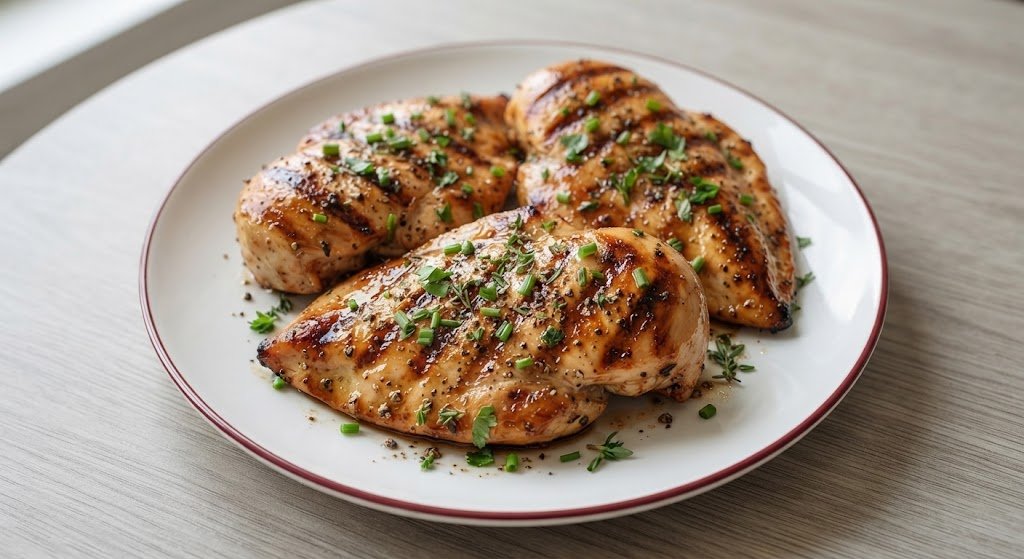
Chicken Breast for Muscle Gain: Protein, Benefits, Diet
Chicken breast is a regular in gym bags, meal-prep containers, and family kitchens. People choose it because it is rich in protein, mild in flavor, and easy to cook in dozens of ways. But how much protein does it really contain, and does it deserve its reputation for building muscle?
This guide looks at chicken breast for muscle gain with realistic numbers, plain explanations, and practical cooking and storage advice. All values refer to cooked, skinless, grilled or roasted chicken breast without added oil, based on typical averages from USDA FoodData Central. They are approximate.
Nutrition Facts per 100 g
| Nutrient | Amount per 100 g (cooked) | Notes |
|---|---|---|
| Calories | about 165 kcal | Raw breast is about 120 kcal, since cooking removes water |
| Protein | about 31 g | Raw is about 22.5 g |
| Carbohydrates | 0 g | |
| Sugars | 0 g | |
| Fiber | 0 g | |
| Total fat | about 3.6 g | Skin on adds fat and calories |
| Saturated fat | about 1.0 g | |
| Cholesterol | about 85 mg | |
| Potassium | about 256 mg | |
| Phosphorus | about 228 mg | |
| Niacin (B3) | about 13.7 mg | |
| Vitamin B6 | about 0.6 mg | |
| Selenium | about 27 µg | |
| Zinc | about 1.0 mg | |
| Sodium | about 74 mg | Without added salt |
Values vary by cut, brand, size, and preparation.
Nutrition Facts per Common Serving
| Serving (cooked, skinless) | Calories | Protein | Carbs | Fat | Fiber |
|---|---|---|---|---|---|
| 100 g | 165 kcal | 31.0 g | 0 g | 3.6 g | 0 g |
| 150 g | 248 kcal | 46.5 g | 0 g | 5.4 g | 0 g |
| 200 g | 330 kcal | 62.0 g | 0 g | 7.2 g | 0 g |
A raw breast loses roughly a quarter of its weight when cooked. A 200 g raw breast usually gives about 150 g of cooked meat.
Protein Content and Quality
At about 31 g of protein per 100 g cooked, chicken breast is one of the most protein-dense everyday foods. About three-quarters of its calories come from protein. It is also a complete protein, which means it contains all nine essential amino acids the body cannot make on its own, including leucine, an amino acid closely studied in muscle protein synthesis.
Here is how it compares per 100 g cooked:
| Food (cooked) | Calories | Protein | Fat |
|---|---|---|---|
| Chicken breast (skinless) | about 165 kcal | about 31.0 g | about 3.6 g |
| Chicken thigh (skinless) | about 179 kcal | about 24.8 g | about 8.2 g |
| Eggs (hard-boiled) | about 155 kcal | about 12.6 g | about 10.6 g |
| Lentils (boiled) | about 116 kcal | about 9.0 g | about 0.4 g |
The breast has the most protein and the least fat per 100 g of the animal foods listed. That is why it is considered one of the leanest protein sources.
Chicken Breast for Muscle Gain: What the Protein Does
Protein contributes to the growth and maintenance of muscle mass. Muscle tissue is constantly being broken down and rebuilt. After resistance training, the body uses amino acids from food to repair and build muscle fibers, so a steady supply matters.
Chicken breast helps in several practical ways:
- High protein, low fat. A 150 g portion gives about 46.5 g of protein for about 248 kcal, so it is easy to reach protein goals without a large calorie load.
- Complete amino acid profile. It supplies every essential amino acid in one food.
- Easy portions. A breast can be weighed, cooked, and divided across meals.
- Neutral flavor. It works with many cuisines, which makes it easier to eat regularly.
Still, no single food builds muscle. Gains depend on several things working together: resistance training, enough total calories, protein spread across the day, sleep, and consistency over months. General public guidelines set the recommended intake for most adults at around 0.8 g of protein per kg of body weight daily, while sports nutrition bodies discuss higher ranges for people who train regularly. A healthcare professional or registered dietitian can say what suits an individual.
Carbohydrates, Fats, and Fiber
Carbohydrates and fiber. Chicken breast has none. For energy around workouts, many people pair it with rice, potatoes, oats, or fruit, and add vegetables for fiber.
Fats. A skinless breast is low in fat, about 3.6 g per 100 g cooked, with about 1 g saturated. Leaving the skin on or cooking in oil raises both the calories and the fat.
Vitamins and Minerals
Chicken breast is a good source of several micronutrients:
- Niacin (B3, about 13.7 mg): contributes to normal energy metabolism.
- Vitamin B6 (about 0.6 mg): contributes to protein and amino acid metabolism.
- Selenium (about 27 µg): contributes to normal immune and thyroid function.
- Phosphorus (about 228 mg): contributes to bones, teeth, and energy metabolism.
- Potassium (about 256 mg): contributes to normal muscle and nerve function.
Potential Benefits for Overall Health
Eaten as part of a varied diet, chicken breast may support health in these ways:
- It provides high-quality protein to help maintain muscle, which matters at every age.
- It contributes B vitamins involved in releasing energy from food.
- It is low in carbohydrates and moderate in calories, so it is easy to fit into many eating patterns.
- Protein-rich meals tend to be filling, which can help with meal planning.
These are general benefits of a nutritious food, not treatments or guarantees.
Why It Fits a High Protein Meal Plan
Chicken breast shows up in so many meal plans for practical reasons:
- Convenience. It cooks in 15 to 25 minutes and reheats well.
- Accurate tracking. Its numbers are well documented, which helps people who plan portions.
- Versatility. Herbs, citrus, spices, and sauces change it completely.
- Availability and cost. It is sold almost everywhere in many forms.
- Meal prep. One batch can cover several lunches and dinners.
It is also worth being honest: chicken is a convenient choice, not a requirement. Protein can come from fish, eggs, dairy, legumes, tofu, and other foods. Variety matters, because different foods bring different fats, fibers, vitamins, and minerals.
How Cooking Changes Its Nutrition
- Grilling and baking: Keep fat low. Water loss concentrates protein and calories per 100 g.
- Poaching and steaming: Gentle, add no fat, and keep the meat moist.
- Pan-frying: Adds the calories of the oil, about 40 kcal per teaspoon of olive oil.
- Breading and deep-frying: Raise calories and fat significantly.
A simple herb grilled method: Pound the breasts to an even thickness of about ¾ inch (2 cm). Rub with a little olive oil, chopped herbs, garlic, salt, pepper, and lemon juice. Marinate for 20 minutes or longer. Grill over medium-high heat for 5 to 7 minutes per side, until the thickest part reaches 165°F (74°C). Rest for 5 minutes before serving.
How to Choose, Store, and Prepare It
Choosing: Raw chicken should look pink and moist and smell clean, with no strong odor or slimy surface.
Storing: Keep raw chicken at 40°F (4°C) or below and cook it within 1 to 2 days, or freeze it for up to 9 months for good quality. Refrigerate cooked chicken within 2 hours, and eat it within 3 to 4 days.
Food safety: Cook to 165°F (74°C). Use separate boards and knives for raw chicken, wash hands thoroughly, and don’t rinse raw chicken, since this can spread bacteria around the kitchen. Thaw it in the fridge, not on the counter. Reheat leftovers until steaming hot.
Who Should Be Careful
- Allergies and intolerances: Check marinades and sauces for allergens such as soy, gluten, or dairy.
- Kidney conditions: People advised to adjust their protein intake should talk to a doctor or dietitian before changing it.
- Sodium-restricted diets: Pre-marinated or processed chicken can be high in salt.
- Special life stages: Pregnancy, childhood, and older age have specific nutrition needs worth discussing with a professional.
Simple Ways to Eat It
- Sliced over a salad with olive oil and lemon.
- With rice and steamed vegetables for a balanced plate.
- In a whole wheat wrap with yogurt sauce.
- Shredded into soup, or stuffed into peppers.
- Cubed in a bowl with quinoa and roasted vegetables.
Conclusion
Chicken breast for muscle gain makes sense because it combines about 31 g of complete protein with only 3.6 g of fat per 100 g cooked, plus B vitamins and minerals. It is lean, affordable, and flexible enough to repeat without boredom.
Remember that muscle gain depends on training, total diet, and rest, not one food. Grill or bake the chicken, cook it to a safe temperature, and balance it with carbohydrates, vegetables, and other protein sources.
Source reference: USDA FoodData Central. Values are typical averages and are approximate.
This article is for general information only and is not medical or dietary advice. Consult a qualified healthcare professional for personal guidance.
FAQ
1. How much protein is in 100 g of chicken breast?
Cooked, skinless chicken breast has about 31 g of protein per 100 g. Raw chicken breast has about 22.5 g per 100 g, because cooking removes water.
2. Is chicken breast enough to build muscle?
It is a useful protein source, but muscle gain also needs resistance training, enough total calories, rest, and a varied diet. No single food does it alone.
3. How many calories are in grilled chicken breast?
About 165 kcal per 100 g cooked without added oil. A 150 g portion has roughly 248 kcal. Oil, skin, and sauces add more.
4. Is chicken breast healthier than chicken thigh?
The breast is leaner, with more protein and less fat per 100 g. The thigh has more fat and more flavor and stays juicier. Both can fit into a balanced diet.
5. Should I eat chicken every day?
There is no single right answer. Variety helps cover a wider range of nutrients, so many dietitians suggest rotating chicken with fish, eggs, legumes, and other proteins.