Horse Body Language: 10 Signs Your Horse Is Telling You
Your horse is talking to you right now. Not with words, but with ears, eyes, nostrils, tail, and posture. Horses are prey animals, and for thousands of years their survival has depended on reading each other quickly and quietly. Once you learn their signals, every barn visit changes.
This guide to horse body language covers ten signs that horse lovers see every day. One rule first: never judge a horse by a single signal. The whole picture, plus the situation, tells the story.
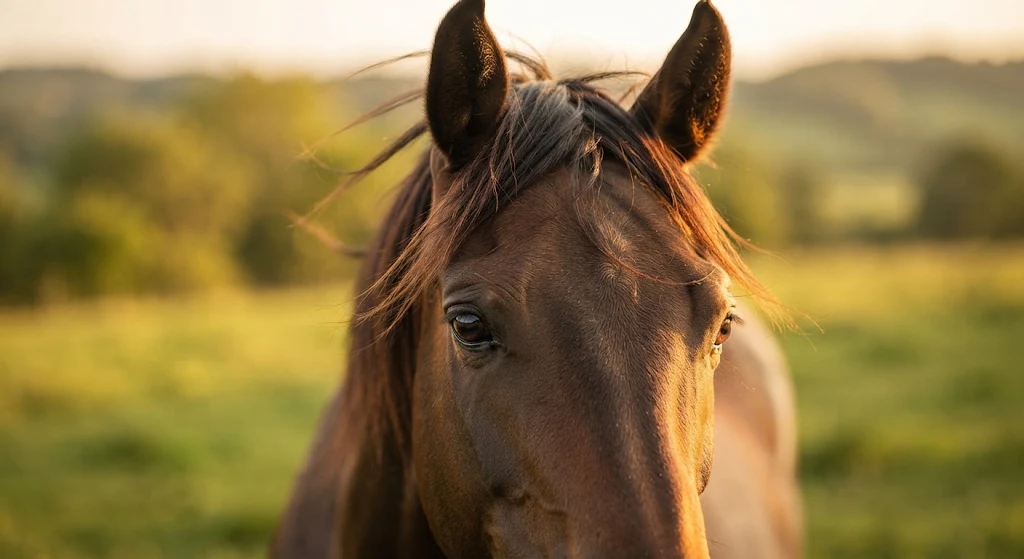
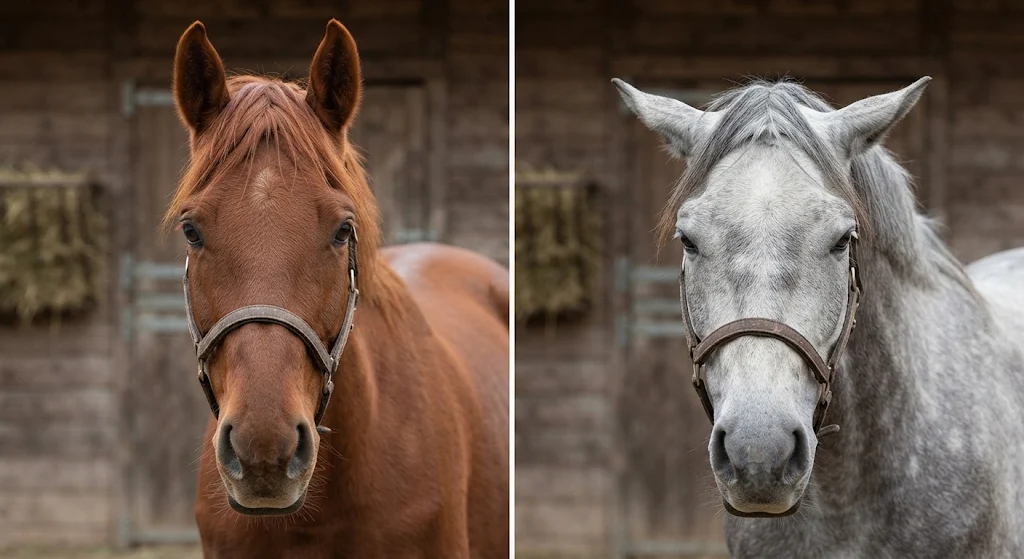
1. Ears: The Horse’s Radar
Ears are the easiest place to start.
- Forward and soft: interested, curious, paying attention.
- One ear forward, one back: listening to two things at once, often a rider and the surroundings.
- Sideways and floppy: relaxed or dozing.
- Pinned flat against the neck: a clear warning. The horse is angry or feeling threatened. Give space.
2. Eyes: Soft or Wide
A calm horse has a soft eye, often with a slightly drooping upper lid. A wide eye with white showing usually means fear or alarm. If you see it, slow down, stay calm, and avoid sudden movements.
3. Nostrils: Sniffing the World
Relaxed, soft nostrils suggest calm. Flared nostrils can mean excitement, effort after exercise, or alarm. A horse who is sniffing you is gathering information, and the introduction is usually friendly.
4. The Tail: A Mood Meter
- Gentle swing: relaxed. Often just flies.
- Fast swishing: irritation, either from insects or annoyance.
- Clamped tight: tension, discomfort, or cold.
- Lifted high: excited and alert, often during play or when something new appears.
5. Licking and Chewing
Many riders notice a horse licking and chewing after a lesson or after a moment of tension. It is commonly read as a sign that the horse is processing and releasing stress. It is a nice moment to pause, praise, and let the horse rest.
6. The Soft Lower Lip
A droopy, loose lower lip is a hallmark of a very relaxed horse. A tight, wrinkled muzzle with tense lips suggests stress or discomfort. It is a small detail, but experienced horse people look for it first.
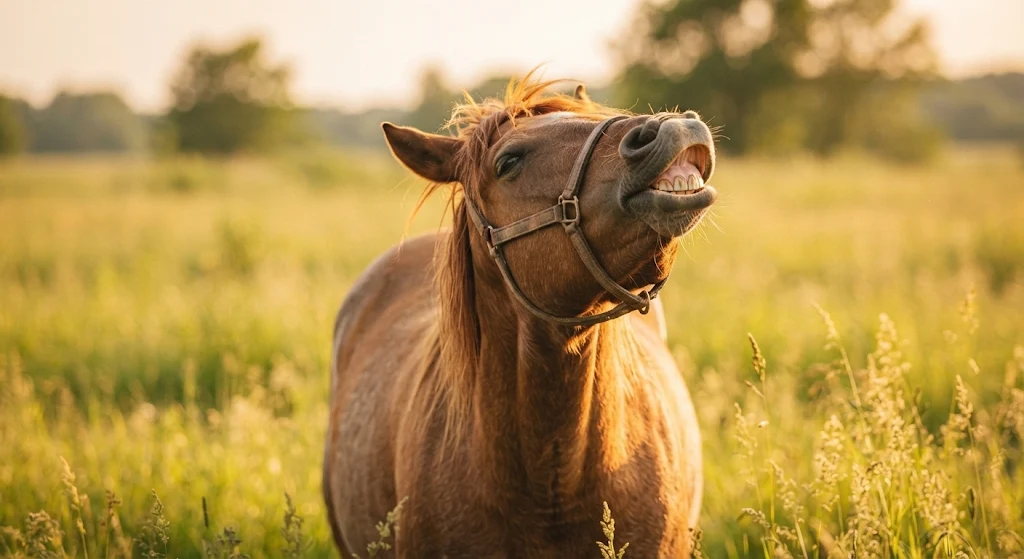
7. The Funny Face (Flehmen)
When a horse lifts its head and curls its upper lip, it looks like laughing. It is actually the flehmen response, a way of drawing scents toward a special organ in the nose. It often happens after smelling something interesting, such as an unusual smell or another horse. It is normal and fun to watch.
8. Resting a Hind Leg
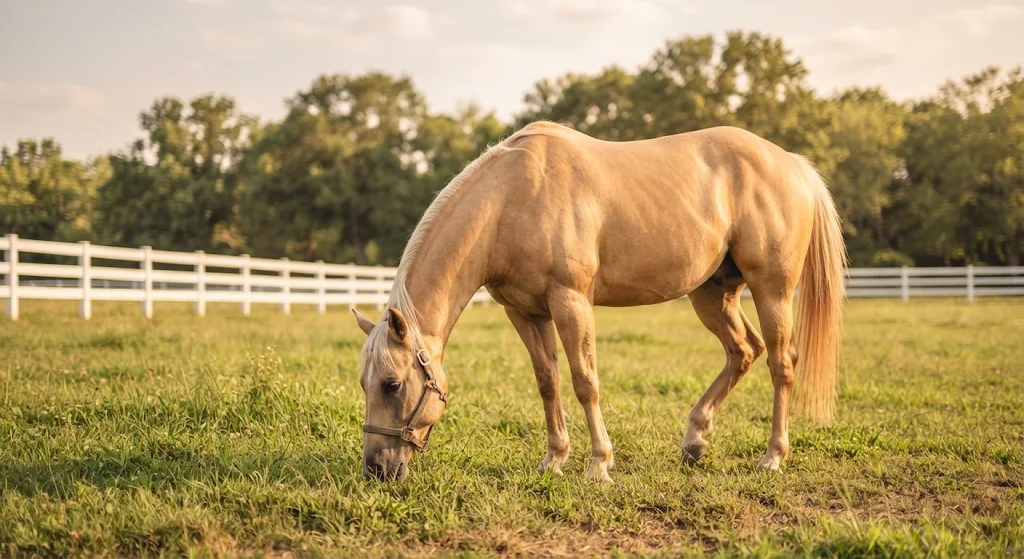
A horse standing with one hind leg softly bent, hip tipped, and head low is usually comfortable. This is a classic relaxed pose. If the horse keeps shifting its weight, shows no interest, or seems uncomfortable, something else may be going on.
9. Voice: Nicker, Whinny, and Snort
- Soft nicker: a greeting, often heard at feeding time or when a favorite person appears.
- Whinny: a loud call, often to a herd mate who is out of sight.
- Snort: clearing the nose, or a sign of alertness and curiosity.
- A long sigh: often a release of tension and relaxation.
10. Pawing and Restlessness
Pawing can mean impatience, boredom, or frustration, for example before feeding. But pawing combined with rolling, sweating, kicking at the belly, or looking at the flank can be a sign of colic, which is an emergency. If you see those signs together, call a veterinarian right away.
How to Read the Whole Horse
A single signal is not enough. Ask yourself:
- What are the ears, eyes, and tail saying together?
- What is happening around the horse? Feeding, weather, strangers, flies.
- Is this normal for this horse? Every horse has its own personality. Knowing what is typical makes unusual behavior easier to spot.
- Has anything changed? A sudden change in behavior can be a sign of pain or illness.
Safe Ways to Respond
- Approach calmly, from the front or side, where the horse can see you. Avoid walking up directly behind.
- Speak softly. A low, steady voice helps.
- Respect warnings. Pinned ears and a raised hind leg mean “back off.”
- Don’t punish fear. A frightened horse needs calm and space.
- Ask experienced people for help. If you are new to horses, learn with an instructor or handler.
- Call a vet if behavior changes suddenly, or if you notice signs of pain.
Never approach an unfamiliar horse without the owner’s permission, and never assume a quiet horse is always safe. Horses are large animals and can react quickly.
Test Yourself
Next time you visit the barn, spend five minutes just watching. Look at the ears, the eyes, and the tail, and guess the mood. Then see if the horse’s next move agrees. It is a great way to deepen your bond.
Conclusion
Horse body language is a quiet but rich vocabulary. Ears, eyes, nostrils, tail, lips, and posture work together to tell you whether a horse is relaxed, curious, annoyed, or afraid. The more you watch, the better you understand.
Stay calm, take the whole picture into account, and ask for professional help when something seems wrong. The reward is a safer, closer relationship with a very expressive animal.
This article is for general information only and is not veterinary or training advice. For health or behavior concerns, consult a qualified equine veterinarian or trainer.
FAQ
1. What do pinned ears mean on a horse?
Ears flat against the neck usually signal anger, irritation, or a warning. Give the horse space and look at the rest of the body to understand the cause.
2. How can I tell if my horse is happy?
Look for soft eyes, relaxed lips, ears that move easily, a loose tail, and a calm, curious attitude. A horse who comes to greet you and shows interest is usually comfortable.
3. Why does my horse curl its lip?
That is the flehmen response. It helps the horse analyze a scent and is normal behavior, not laughing.
4. What does a swishing tail mean?
Often flies or irritation. A fast, hard swish can signal annoyance. Look at the situation and the rest of the body.
5. When is behavior a warning of illness?
Sudden changes, such as pawing with sweating and rolling, loss of appetite, or unusual dullness, can be signs of pain or illness. Call a veterinarian promptly.