Apple Fritter Cake: Easy No-Fry Recipe with Vanilla Glaze
There is a certain kind of craving that only an apple fritter can fix. You want the craggy edges, the pockets of soft cinnamon apples, and that thin sugar glaze that cracks when you bite into it. The trouble is that a real fritter asks a lot of you: a yeasted dough, a long rise, a pot of hot oil, and a kitchen that smells like a fairground afterward.
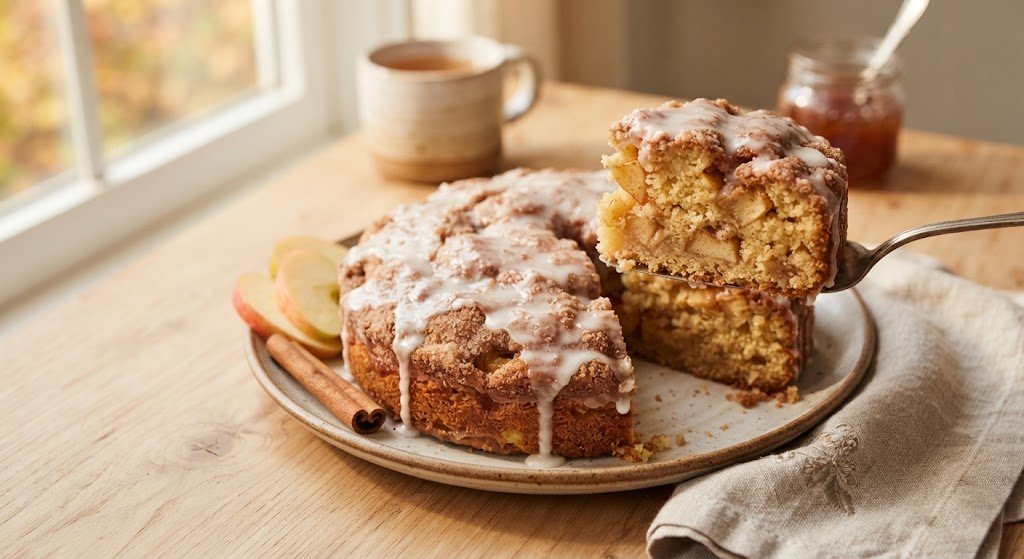
This apple fritter cake gives you the same experience from a single bowl and a baking pan. It is moist, loaded with fresh apples, and finished with a glaze that sets into a sugary shell. Whether you’re looking for an easy apple fritter cake for a weeknight or one of those fall dessert recipes that disappears at the first gathering, this one is hard to get wrong.
Why This Apple Fritter Cake Works
A fritter is really about contrasts: soft inside, crisp and sugary outside, with generous fruit throughout. This recipe copies those contrasts with a few simple choices.
- Chunky apples, not shredded. Pieces about the size of a thumbnail stay distinct and tender, the way they do inside a fritter.
- A brown sugar and cinnamon crust. Sprinkled over the top before baking, it caramelizes into a craggy surface.
- A double glaze. One thin coat on the warm cake and a second once it cools creates the shiny, cracked finish you expect from a bakery.
- A sturdy, buttery crumb. The batter is thick enough to hold the apples in place instead of letting them sink.
Because it’s a no yeast apple fritter, there is no proofing, no kneading, and no guesswork about whether your dough has risen enough.
Ingredients
This makes a 9×13-inch cake that serves about 12.
For the cake
- 2½ cups (315 g) all-purpose flour
- 2½ teaspoons baking powder
- ½ teaspoon salt
- 2 teaspoons ground cinnamon
- ¼ teaspoon ground nutmeg
- ½ cup (115 g) unsalted butter, melted and slightly cooled
- ¾ cup (150 g) granulated sugar
- ½ cup (100 g) packed light brown sugar
- 2 large eggs
- 1 cup (240 ml) whole milk
- 2 teaspoons vanilla extract
For the apples
- 3 medium apples (about 500 g), peeled and cut into ½-inch pieces
- 1 tablespoon lemon juice
- 1 tablespoon brown sugar
- ½ teaspoon ground cinnamon
For the topping and glaze
- ¼ cup (50 g) brown sugar mixed with 1 teaspoon cinnamon
- 1½ cups (180 g) powdered sugar
- 3 tablespoons milk
- 1 teaspoon vanilla extract
- A pinch of salt
Which Apples Should You Use?
The best apple for this cake is one that stays firm in the oven. Granny Smith, Honeycrisp, Braeburn, and Pink Lady all hold their shape and balance the sweet glaze with a bit of tartness. Avoid very soft varieties such as McIntosh, which tend to break down into applesauce. A mix of two types gives the most interesting flavor.
Step-by-Step Instructions
1. Prepare the pan and oven
Heat the oven to 350°F (175°C). Grease a 9×13-inch pan and line it with parchment, leaving a little overhang on the long sides. The overhang lets you lift the whole cake out later for cleaner slices.
2. Toss the apples
In a bowl, combine the chopped apples with the lemon juice, 1 tablespoon of brown sugar, and ½ teaspoon of cinnamon. Let them sit while you mix the batter. The sugar draws out a little juice, which seasons the fruit and keeps it from tasting bland.
3. Mix the dry ingredients
Whisk the flour, baking powder, salt, cinnamon, and nutmeg in a large bowl. Whisking matters here, because it spreads the baking powder evenly and prevents tunnels or dense patches.
4. Mix the wet ingredients
In another bowl, whisk the melted butter with both sugars until it looks thick and glossy. Beat in the eggs one at a time, then add the milk and vanilla.
5. Combine
Pour the wet mixture over the dry ingredients and fold with a spatula until you no longer see streaks of flour. Stop there. Overmixing builds gluten and makes the cake tough rather than tender.
6. Add the apples and top
Drain off any extra liquid from the apples, then fold about two-thirds of them into the batter. Spread the batter into the pan, scatter the remaining apples on top, and press them in lightly. Sprinkle the cinnamon-sugar evenly over the surface.
7. Bake
Bake for 35 to 40 minutes, until the top is deep golden and a toothpick inserted in the center comes out with a few moist crumbs but no wet batter. If the top browns too fast, tent it loosely with foil for the last 10 minutes.
8. Glaze in two stages
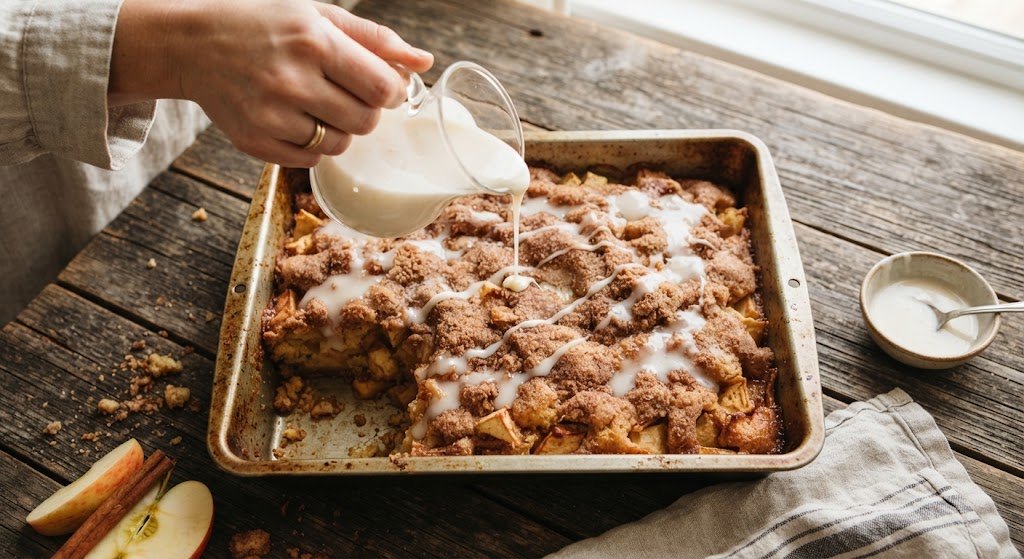
Whisk the powdered sugar, milk, vanilla, and salt until smooth and pourable. While the cake is still warm, spread about half of the glaze over it. The warmth lets it soak slightly into the crumb. Once the cake has cooled completely, drizzle on the rest. This second layer sets into the crackly finish that makes it taste like a fritter.
Let the glaze set for 15 to 20 minutes before cutting.
Tips for the Best Results
Cut the apples evenly. Pieces of different sizes cook unevenly. Aim for about ½ inch so they soften without turning to mush.
Measure the flour carefully. Spoon it into the cup and level it off, or better, weigh it. Packed flour is the most common cause of a dry cake.
Don’t skip the resting time. The cake sets as it cools. Cutting it hot makes the crumb gummy and the apples slide around.
Use room-temperature eggs and milk. They blend into the batter more smoothly. If you forgot, place the eggs in warm water for five minutes.
Check your baking powder. If the tin has been open for more than six months, it may have lost strength. A flat cake is often an old-leavener problem.
Variations to Try
This apple fritter cake recipe is a good base for experimenting.
- Nutty crunch: Scatter ½ cup of chopped pecans or walnuts over the top with the cinnamon sugar.
- Maple glaze: Replace the vanilla in the glaze with 1 tablespoon of maple syrup and reduce the milk slightly.
- Pear and ginger: Swap the apples for firm pears and add ½ teaspoon of ground ginger to the batter.
- Cardamom twist: Replace the nutmeg with ¼ teaspoon of cardamom for a warmer, slightly floral flavor.
- Brown butter: Cook the butter until it smells nutty and turns amber, then cool it before using. It adds real depth to an apple cake with glaze.
Storage and Make-Ahead Advice
Room temperature: Keep the cake covered for up to 2 days. The glaze may soften slightly, which is normal.
Refrigerator: Store in an airtight container for up to 4 days. Let slices come to room temperature before serving, since cold cake can taste dull.
Freezer: For longer storage, bake and cool the cake without glazing, wrap it tightly, and freeze for up to 2 months. Thaw overnight in the fridge, then glaze before serving.
Reheating: Warm an individual slice for 10 to 15 seconds in the microwave. It softens the crumb and brings back the cinnamon aroma.
When to Serve It
This cake suits a lot of occasions. It works as a weekend breakfast alongside coffee, a potluck dessert that travels well in its pan, or a simple end to a holiday meal. For something more indulgent, serve a warm slice with vanilla ice cream or a spoonful of salted caramel. Among all the fall dessert recipes in a baker’s collection, it is one of the least stressful, because it can mostly be made ahead.
Conclusion
You don’t need a deep fryer or a day of waiting to enjoy something that tastes like a classic apple fritter. This apple fritter cake relies on fresh, firm apples, a brown sugar crust, and a two-stage glaze to deliver the soft, craggy, sugary experience in about an hour of mostly hands-off time.
Choose apples that hold their shape, mix the batter gently, and be patient with the cooling. Do those three things and you’ll have a cake worth baking again every autumn.
FAQ
1. Can I make apple fritter cake without yeast?
Yes, this recipe uses baking powder instead of yeast, so there is no rising time. The result is more cake-like than a traditional fritter, but the flavor and glaze are very close.
2. What are the best apples for apple fritter cake?
Firm baking apples such as Granny Smith, Honeycrisp, Braeburn, and Pink Lady work best. They stay in distinct pieces and give a good balance of sweet and tart. Avoid mealy or very soft apples.
3. Why did my apples sink to the bottom?
Usually the batter was too thin or the apple pieces were too large and wet. Drain extra liquid from the apples, keep the batter thick, and place some of the fruit on top as well as inside.
4. Can I bake this in a smaller pan?
Yes. A 9-inch square pan works, but the cake will be taller and needs about 45 to 50 minutes. Check it with a toothpick, and tent the top with foil if it browns too quickly.
5. Can I freeze apple fritter cake?
Yes. Freeze it without the glaze, wrapped tightly, for up to 2 months. Thaw it in the refrigerator overnight and glaze it just before serving for the best texture.