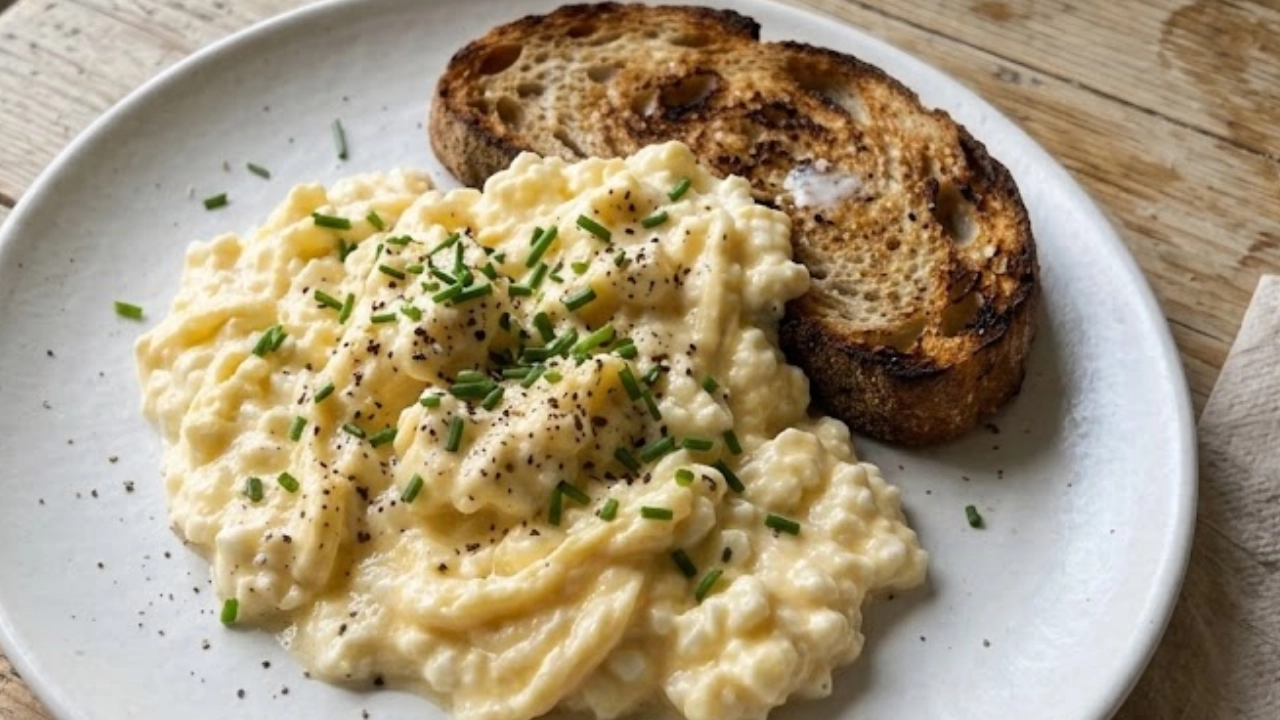
Cottage Cheese Scrambled Eggs: The Creamy, Protein-Packed Breakfast Upgrade
If your mornings tend to end with a granola bar eaten over the sink, this one is for you. Cottage cheese scrambled eggs take less than ten minutes and use two ingredients you probably already own. They also keep you full far longer than toast or cereal.
The idea is simple: stir a spoonful of cottage cheese into beaten eggs before they hit the pan. The curds melt into the eggs, adding moisture, richness, and a surprising amount of extra protein. Even people who dislike cottage cheese on its own often enjoy it here, because it disappears into the eggs.
This guide covers why the combination works, how to cook it properly, and how to vary it so you never get bored. It also covers the mistakes that lead to rubbery eggs.
Table of Contents
Why Cottage Cheese and Eggs Belong Together
Eggs are already a strong protein source, but cottage cheese adds more. It also adds something eggs lack: a gentle, milky creaminess that stays soft when heated.
A Smarter High-Protein Breakfast
Three large eggs provide roughly 18 grams of protein. Stir in a third of a cup of cottage cheese and you add around 8 more, bringing a hearty portion close to 25 grams. For anyone aiming for a high-protein breakfast, whether for muscle maintenance, appetite control, or simply steadier energy, that is a meaningful jump with no powders involved.
Naturally Low in Carbs
Both ingredients contain very little carbohydrate, which makes this a dependable low-carb breakfast. It fits keto-leaning, diabetic-friendly, and general lower-carb eating styles without special substitutions.
Better Texture With Less Effort
Cottage cheese adds extra moisture, and moisture is what protects eggs from drying out. The curds also create tiny pockets as they warm, which is why the finished eggs look light and fluffy. In short, the cheese does some of the work a splash of milk or cream would do, while contributing protein instead of just liquid.
Ingredients You’ll Need
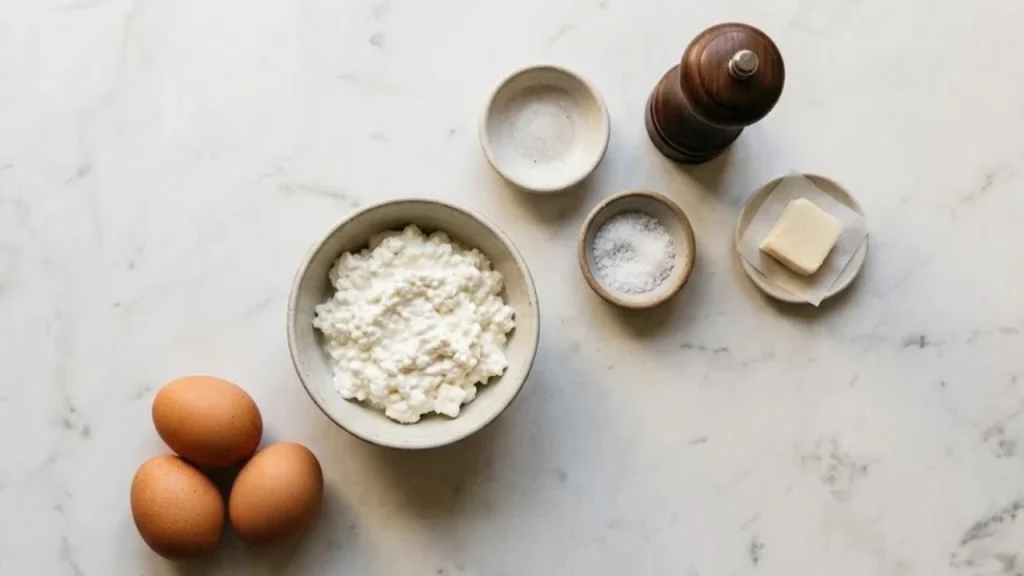
This makes one very generous serving or two lighter ones:
- 3 large eggs
- 1/3 cup cottage cheese (2% or full-fat gives the best texture)
- A small pinch of salt
- Freshly cracked black pepper
- 1 teaspoon butter or olive oil
That is the whole list. Everything else is optional flavor.
A note on cottage cheese choice: Small-curd varieties blend more easily, so they are the safest pick for beginners. Large-curd cottage cheese works too, but you will see small white bits in the finished eggs unless you mash the curds first. Low-fat versions are fine, though they release a little more liquid, so cook the eggs slightly longer.
How to Make Cottage Cheese Scrambled Eggs
If you have ever wondered how to make scrambled eggs that stay tender rather than turning dry, the secret is low heat and patience. Follow these steps.
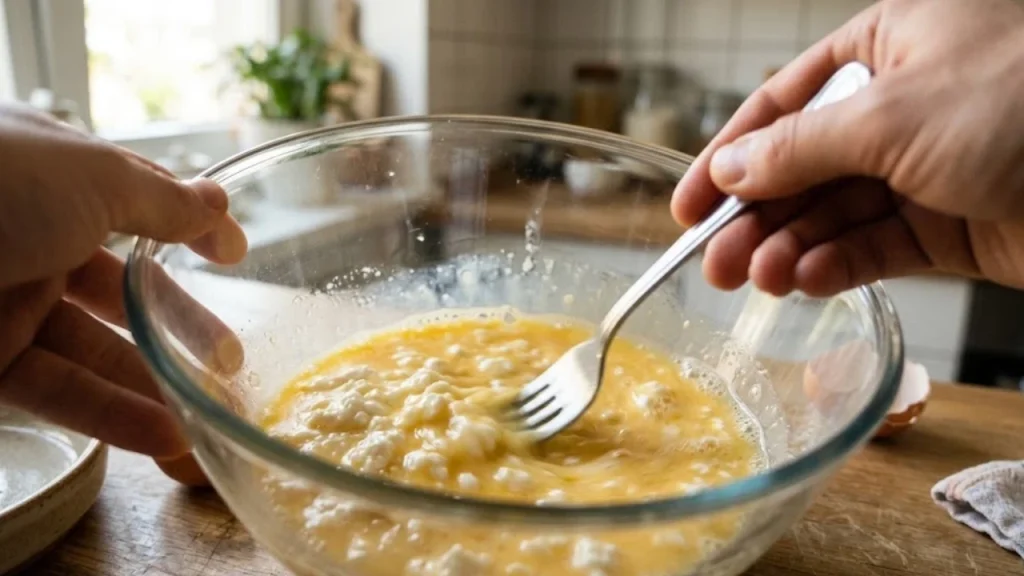
- Combine and beat. Crack the eggs into a bowl, add the cottage cheese, salt, and pepper. Beat with a fork for about 30 seconds. Some curds will remain, and that is fine.
- Warm the pan. Place a nonstick skillet over medium-low heat and add your butter or oil. It should melt gently, not sizzle aggressively.
- Pour and wait. Add the egg mixture and let it sit undisturbed for about 20 seconds, until the edges begin to firm up.
- Fold, don’t stir. Using a silicone spatula, push the set portions from the edges toward the middle in slow, wide strokes. Tilt the pan so the liquid egg flows into the gaps.
- Pull it early. When the eggs look mostly set but still slightly glossy, slide the pan off the heat. The residual warmth finishes the job in the next 30 seconds.
- Serve right away. Scrambled eggs continue to firm up on the plate, and waiting only makes them drier.
The whole process takes roughly four to five minutes of cooking.
Tips for Fluffy Scrambled Eggs Every Time
Good technique matters more than the recipe here. These adjustments make the biggest difference.
Keep the Heat Gentle
High heat is the number one reason scrambled eggs turn tough. Proteins tighten quickly and squeeze out water, leaving you with a watery plate of rubbery curds. Medium-low heat gives you control and a creamier result.
Blend More for a Smoother Texture
If you want a completely uniform, custard-like scramble, pulse the eggs and cottage cheese in a blender for ten seconds, or whisk them thoroughly. This is a good trick for children or anyone who dislikes visible curds.
Season at the Right Time
Cottage cheese already contains salt, so go easy at first. Taste the finished eggs and adjust. Adding too much salt up front is harder to fix than adding a pinch at the end.
Use the Right Pan
A nonstick skillet around eight to ten inches wide suits two to three eggs. A pan that is too large spreads the mixture thin, so it overcooks before you can fold it.
Don’t Overload With Add-Ins
Vegetables and meats are welcome, but they release water. Cook them separately first, then fold them into the eggs at the end so the scramble stays creamy.
Flavor Variations to Keep Things Interesting
Once you have the base down, this recipe becomes a template. Here are some combinations worth trying.
Mediterranean style: Fold in chopped sun-dried tomatoes, a few olives, and a spoonful of crumbled feta. Finish with dried oregano.
Southwestern kick: Add cumin, a pinch of smoked paprika, diced jalapeño, and a squeeze of lime. Spoon over black beans for extra fiber.
Garden herb: Stir in chives, parsley, and a little dill. Fresh herbs brighten the richness of the eggs beautifully.
Spinach and garlic: Sauté a handful of spinach with a little garlic until wilted, squeeze out the moisture, and fold it in at the end.
Savory and sharp: A tablespoon of grated Parmesan or sharp cheddar melts into the warm eggs and adds depth without much extra effort.
What to Serve With Your Eggs
This dish is flexible enough to be a complete breakfast or one part of a bigger spread.
- On toast: Sourdough or whole-grain bread adds fiber and a satisfying crunch.
- In a wrap: Roll the eggs in a warm tortilla with avocado and salsa for a portable breakfast burrito.
- With fruit: Berries, sliced melon, or an orange balance the savory flavors nicely.
- As a bowl: Layer the eggs over roasted sweet potatoes, greens, or leftover grains for a filling lunch or dinner.
- On the side: Roasted tomatoes or sautéed mushrooms work well if you prefer to keep carbs low.
Can You Meal Prep Them?
Yes, with a few cautions. Scrambled eggs are best fresh, but they reheat acceptably. Cook them slightly underdone, cool them quickly, and refrigerate in an airtight container for up to three days. Reheat in short 20-second bursts in the microwave, stirring between rounds, or warm them gently in a skillet with a teaspoon of water. This approach keeps them from turning rubbery.
For grab-and-go mornings, you can also portion cooked eggs into wraps and freeze them individually. Thaw overnight in the refrigerator before heating.
10-Minute Protein-Packed Boiled Egg & Avocado Salad Bowl
Nutrition Considerations
Cottage cheese scrambled eggs deliver high-quality protein, along with choline, vitamin B12, selenium, and calcium. They are also relatively low in carbohydrates. Cottage cheese does contribute sodium, so if you are watching your intake, choose a lower-sodium version and skip added salt.
Eggs contain dietary cholesterol, and for most healthy people moderate egg consumption fits within a balanced diet. If you have a medical condition such as high cholesterol, diabetes, or kidney concerns, check with your doctor or a registered dietitian about what portion suits you. This article is for general information and is not medical advice.
Common Mistakes to Avoid
- Cooking too hot. Fast heat equals dry, tough eggs.
- Over-stirring. Constant scrambling creates tiny crumbs instead of soft folds.
- Skipping the rest. Pulling the pan off the heat just before the eggs finish keeps them tender.
- Using watery add-ins. Raw tomatoes or mushrooms add liquid and dilute flavor.
- Choosing a sticky pan. A scratched or poorly seasoned pan tears the curds apart.
Avoid these and you will get consistently good results from this easy breakfast recipe.
1. Will my eggs taste like cottage cheese?
Not noticeably. The mild flavor blends into the eggs, adding creaminess rather than tang. Most people who try it can’t pinpoint the cheese, which makes it a good way to get more protein into picky eaters’ meals.
2. Do I need to blend the cottage cheese first?
No. A quick whisk is enough for a rustic texture with tiny soft curds. Blend only if you want a perfectly smooth, uniform scramble.
3. Can I use fat-free cottage cheese?
You can, but the eggs may turn out slightly less creamy and release more water. If you use it, cook a little longer over gentle heat and consider adding a small amount of butter for richness.
4. How many eggs and how much cottage cheese should I use per person?
A good rule is about 1 1/2 eggs and 3 tablespoons of cottage cheese per person for a light portion. For a bigger appetite, use three eggs and a third of a cup.
5. Are cottage cheese scrambled eggs good for weight management?
They can be a helpful part of one. Protein-rich meals tend to increase fullness, which may reduce mid-morning snacking. Overall results still depend on your total diet, portions, and activity level, so treat them as one useful tool rather than a guaranteed solution.
Conclusion
Cottage cheese scrambled eggs prove that a small change can transform an everyday meal. By adding one ingredient, you get softer, fluffier eggs, a noticeable protein boost, and a breakfast that keeps you satisfied for hours, all in under ten minutes.
Remember the essentials: keep the heat low, fold gently, and take the pan off the stove while the eggs still look slightly glossy. From there, experiment with herbs, vegetables, and spices until you find your favorite version. Make a batch tomorrow morning and see how much better a simple breakfast can be.