Horse Colors Explained: Bay, Chestnut, Roan and More
Horses come in a stunning variety of colors, and the names can be confusing. Is it a bay or a chestnut? A palomino or a buckskin? A roan or a grey? This guide makes it simple.
Start With the Basics: Three Base Colors
Almost every horse color starts from one of three base colors.
- Black: black body, mane, tail, and legs.
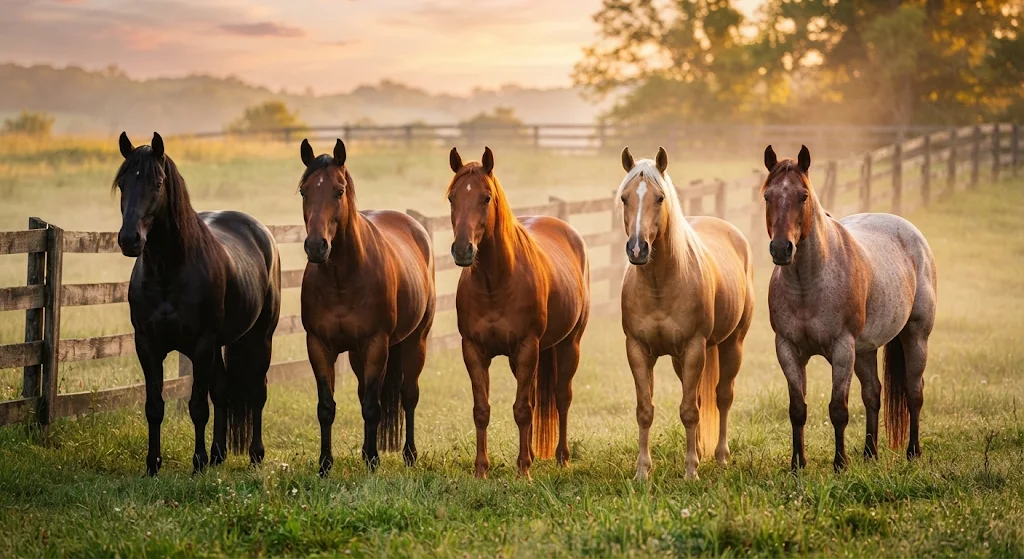
- Bay: brown to reddish body with a black mane, tail, and lower legs (called “black points”). The most common color in many breeds.
- Chestnut (sorrel): reddish to brown, with a mane and tail of the same color or lighter, and no black points.
An easy tip: look at the mane and legs. Black points mean bay, and no black means chestnut.
Dilution Colors: Lighter Versions
Some genes lighten the base color.
- Palomino: a chestnut horse with a cream gene. The body is golden, and the mane and tail are white or flaxen.
- Buckskin: a bay horse with one cream gene. The body is tan or gold, and the points stay black.
- Cremello and perlino: horses with two cream genes, pale cream with blue or pale eyes.
- Dun: a sandy or tan body with black points and primitive markings like a dorsal stripe down the back, and sometimes faint stripes on the legs.
Roan: The Frosted Look
Roan horses have white hairs mixed evenly into the colored coat, while the head and lower legs usually stay solid. The result is a shimmering, frosted look.
- Red roan: a chestnut base with white hairs. It can look rosy, even pinkish.
- Blue roan: a black base with white hairs, giving a bluish-grey shade.
- Bay roan: a bay base with white hairs.
Roan color doesn’t change much with age, though the coat can look different across seasons.
Grey: Not Always What It Seems
Grey horses are born a darker color, often black, bay, or chestnut, and gradually lighten with age as more white hairs appear. Many horses called “white” are really grey. Their skin underneath is dark.
True white horses, born white with pink skin, are rare.
Patterns and Spots
- Pinto or paint: large patches of white and another color. Patterns include tobiano (rounded patches that cross the back) and overo (patches that often leave the back colored).
- Appaloosa: spotted patterns, such as a blanket of spots over the hips or a leopard coat.
- Sabino: irregular white markings, often high on the legs and belly, with ragged edges.
White Markings
Many horses have white markings on the face and legs. Common names include:
- Star: a white spot on the forehead
- Stripe: a narrow white line down the face
- Blaze: a wide white stripe
- Snip: white on the nose
- Sock and stocking: white on the lower leg, up to the ankle or knee
These are like fingerprints and help identify individual horses.
Quick Identification Guide
- Is the body black? Check for brown fading. If it is truly black: black.
- Is the body brown with black legs and mane? Bay.
- Is the body red-brown with no black points? Chestnut.
- Is it golden with a pale mane? Palomino.
- Is it tan or gold with black points? Buckskin.
- Does the coat have mixed white hairs and a solid head? Roan.
- Is the coat gradually turning white with age? Grey.
- Are there big patches or spots? Pinto, paint, or appaloosa.
Color and Health
Coat color is mostly cosmetic, but a few points are good to know:
- Light skin can sunburn, especially on pink noses. Sun protection and shade help.
- Grey horses have a higher chance of developing a type of skin growth called melanoma as they age. Regular checks by a veterinarian are sensible.
- Certain patterns are linked to specific genetic conditions in some breeds. Ethical breeders use testing.
Conclusion
Horse colors follow a simple logic: three base colors, a few lightening genes, and a handful of patterns. Once you learn the clues, you can name almost any horse you meet.
FAQ
1. What is the difference between bay and chestnut?
A bay has black points (mane, tail, lower legs). A chestnut does not.
2. What is a roan horse?
A horse with white hairs mixed through a colored coat, with a mostly solid head and legs.
3. Why do grey horses turn white?
A gene causes the coat to gradually lose pigment over the years, so they lighten with age.