Magnesium Rich Foods: Natural Sources and Why Riders Care
Magnesium rarely gets the attention of protein or vitamin C, yet the body uses it all day long. It takes part in hundreds of reactions, from how muscles contract and relax to how nerves send signals and how cells release energy from food. For people who spend long hours on their feet and in the saddle, such as horse riders, it is a mineral worth knowing about.
This guide lists the best magnesium rich foods, with realistic amounts per serving, explains how much adults generally need, and covers why riders and other active people often look at it. Values are typical averages from USDA FoodData Central and the US National Institutes of Health, and they are approximate. There are no tables, only short lists that are easy to read on a phone.
What Does Magnesium Do in the Body?
Magnesium is an essential mineral, so the body cannot make it and must get it from food. In neutral terms, it contributes to:
- Normal muscle function, including contraction and relaxation.
- Normal nervous system function.
- Normal energy metabolism, which is the way the body releases energy from food.
- Electrolyte balance, together with potassium, calcium, and sodium.
- The reduction of tiredness and fatigue, as a nutrient in a balanced diet.
- Maintenance of normal bones and teeth.
Most magnesium is stored in bones, with the rest in muscles and soft tissues, and only a tiny part in the blood.
How Much Magnesium Do Adults Need?
Recommended daily intakes (RDA) set by the US National Institutes of Health are:
- Men, 19 to 30 years: 400 mg
- Men, 31 years and older: 420 mg
- Women, 19 to 30 years: 310 mg
- Women, 31 years and older: 320 mg
- Pregnancy: about 350 to 360 mg
Needs vary by country, age, and individual circumstances. Surveys in several countries suggest that many adults eat less than the recommended amount, mostly because diets are low in whole grains, legumes, nuts, seeds, and vegetables.
Best Natural Sources of Magnesium
The amounts below are approximate per common serving.
Seeds
- Pumpkin seeds, roasted (28 g, about 1 oz): about 156 mg
- Chia seeds (28 g): about 111 mg
- Sunflower seeds (28 g): about 37 mg
Nuts
- Almonds, dry roasted (28 g): about 80 mg
- Cashews, dry roasted (28 g): about 74 mg
- Peanuts (about 30 g): about 63 mg
- Peanut butter (2 tablespoons): about 49 mg
Legumes
- Black beans, cooked (½ cup): about 60 mg
- Edamame, cooked (½ cup): about 50 mg
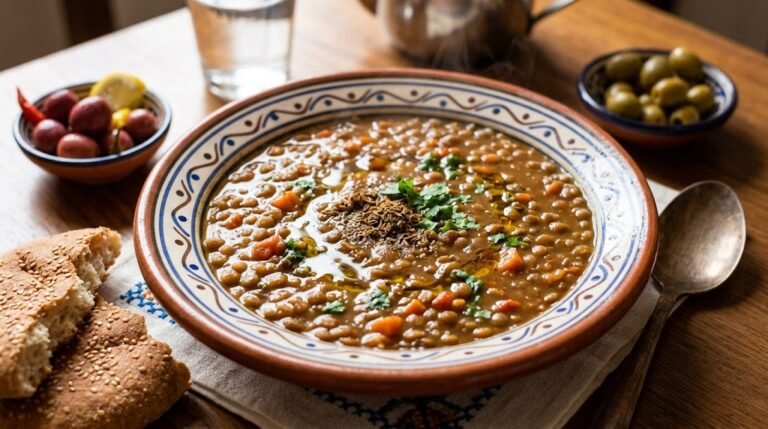
- Lentils, cooked (½ cup): about 36 mg
Vegetables
- Spinach, boiled (½ cup): about 78 mg
- Swiss chard, boiled (½ cup): about 75 mg
- Baked potato with skin (medium): about 43 mg
- Avocado, cubed (1 cup): about 44 mg
Whole Grains
- Quinoa, cooked (1 cup): about 118 mg
- Brown rice, cooked (½ cup): about 42 mg
- Whole wheat bread (2 slices): about 46 mg
- Oatmeal, cooked (1 cup): about 56 mg
Dairy, Fish, and Others
- Plain low-fat yogurt (1 cup): about 42 mg
- Milk (1 cup): about 24 to 27 mg
- Fortified soy milk (1 cup): about 61 mg
- Salmon, cooked (85 g): about 26 mg
- Banana (1 medium): about 32 mg
- Dark chocolate, 70 to 85 percent cocoa (28 g): about 65 mg
Pumpkin seeds, chia seeds, almonds, spinach, and quinoa stand out as the most concentrated everyday options.
Why Riders Often Pay Attention to Magnesium
Riding is more physical than it looks. Staying balanced, holding a steady seat, using the core and legs, and then handling the horse, tack, and feed all ask a lot of the muscles and the nervous system. Barn days are also often long, outdoors, and in heat or cold.
Here is why magnesium comes up for riders, and what is and isn’t known.
Muscle function. Magnesium contributes to normal muscle and nerve function, which matter for coordination and recovery.
Sweat losses. People lose small amounts of magnesium in sweat, along with sodium and potassium. The losses are modest compared with sodium, and a balanced diet usually covers them. Still, long, hot days make a varied, mineral-rich diet more important.
Energy and tiredness. As part of energy metabolism, magnesium contributes to the reduction of tiredness and fatigue, but only when the diet lacks it. Eating more magnesium than you need will not create extra energy.
An honest note about cramps. Many riders and athletes believe magnesium prevents cramps. Research does not clearly support this for the general population, and muscle cramps have many possible causes, such as hydration, fatigue, and training load. If cramps are frequent or severe, ask a healthcare professional.
In short, magnesium-rich foods are a sensible part of an active person’s diet, but they are not a performance trick or a treatment.
Why Food First?
A supplement is not necessary for most people who eat a varied diet. Food has several advantages:
- It comes with fiber, protein, vitamins, and other minerals.
- It is hard to overdo. Excess magnesium from food is removed by healthy kidneys.
- Supplements have an upper limit. The US recommended upper limit for magnesium from supplements is 350 mg per day for adults, because high doses can cause diarrhea, nausea, and cramping.
- Some people should avoid supplements. Those with kidney disease, and people who take certain medications such as some antibiotics, diuretics, and bisphosphonates, should ask a doctor or pharmacist first.
Rider-Friendly Ways to Eat More Magnesium
These ideas are easy to carry or prepare before a barn day.
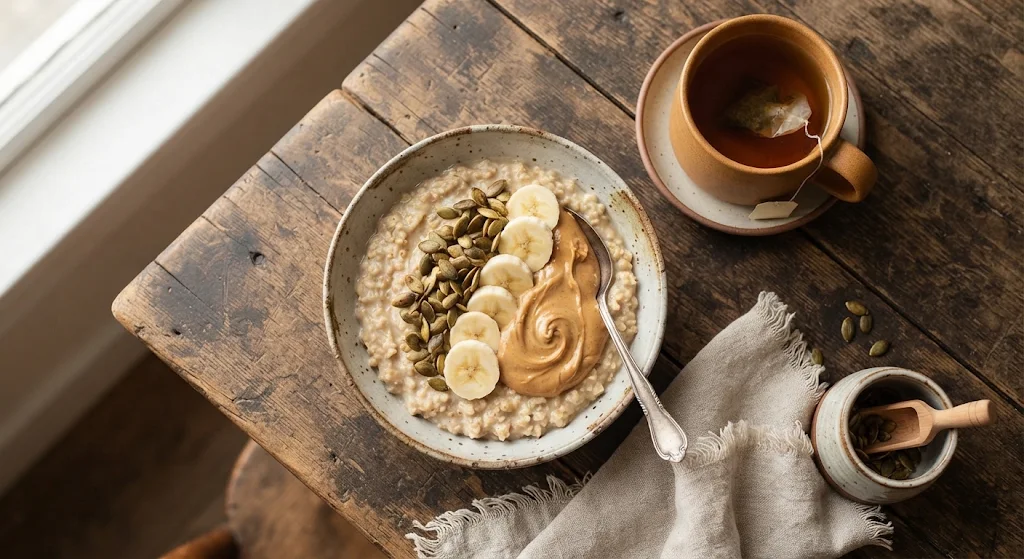
- Oatmeal with pumpkin seeds and banana. A bowl of cooked oats (about 56 mg), 1 tablespoon of pumpkin seeds (about 40 mg), and a banana (about 32 mg) gives roughly 130 mg.
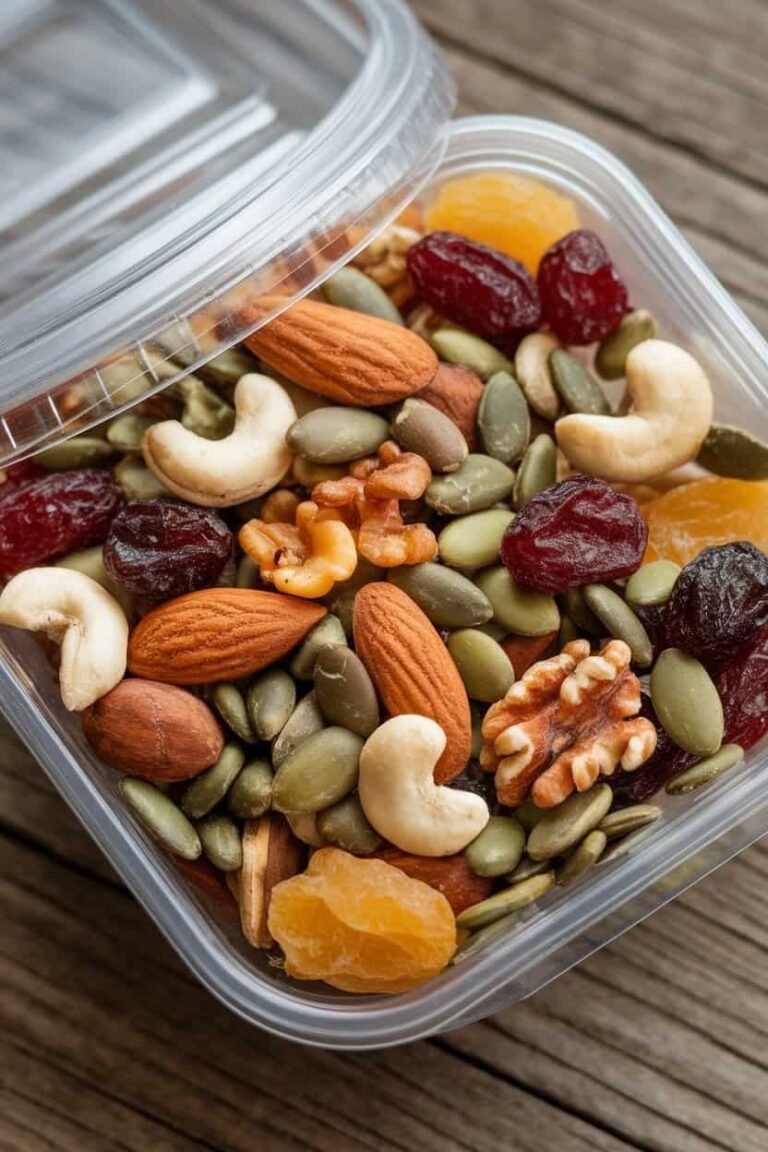
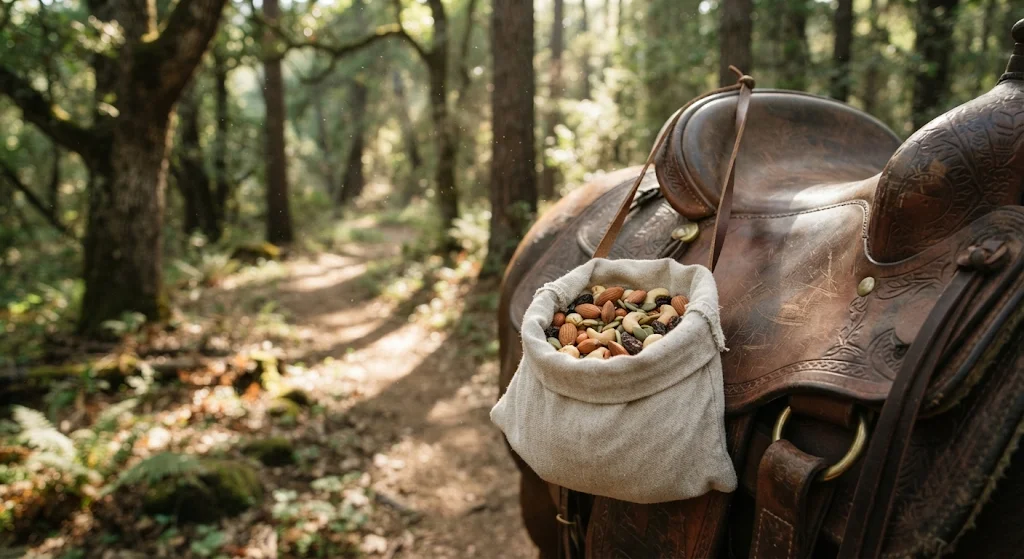
- Trail mix. Mix almonds, cashews, pumpkin seeds, and raisins. A 40 g handful provides about 100 mg, and it keeps well in a saddlebag.
- Spinach and bean omelette. Eggs with ½ cup of spinach (about 78 mg) and black beans (about 60 mg).
- Peanut butter on whole wheat toast. About 95 mg with 2 slices and 2 tablespoons.
- Quinoa salad. Cooked quinoa (about 118 mg) with chickpeas, cucumber, and olive oil, and ready for a lunch box.
- Yogurt with chia and almonds. About 42 mg from yogurt, 55 mg from 14 g of chia, and 40 mg from a few almonds.
- Dark chocolate and nuts as a small treat, about 65 mg per 28 g of chocolate.
A Sample Day with About 400 mg
This is just an example and not a prescription.
- Breakfast: oatmeal (56 mg) with 1 tablespoon of pumpkin seeds (about 40 mg) and a banana (32 mg), about 128 mg.
- Snack: a handful of almonds (28 g, about 80 mg).
- Lunch: quinoa and black bean bowl with spinach, about 118 + 60 + 40 = roughly 218 mg for a generous bowl.
- Dinner: salmon (26 mg) with brown rice (42 mg) and vegetables, about 68 mg.
That adds up to well above 400 mg, so most people don’t need to plan this tightly. A few magnesium rich foods spread across the day usually do the job.
Tips to Get More From Your Food
- Choose whole grains over refined ones. Refining removes much of the magnesium. Brown rice and whole wheat contain far more than white rice and white bread.
- Eat the skin of potatoes when it is clean and edible.
- Don’t discard the cooking water of vegetables if you can use it in soup. Some minerals leach into it.
- Soak or sprout beans and grains if you like. It can improve how easily some minerals are absorbed, though the total magnesium stays similar.
- Mix sources. Seeds, nuts, beans, greens, and whole grains each add something different.
- Mind portion sizes. Nuts and seeds are rich in calories, so a small handful is enough.
- Stay hydrated. Water, with a balanced diet, matters as much as any single nutrient.
Who Should Be Careful
- Kidney disease: The kidneys control magnesium levels, so people with kidney problems should ask a doctor before increasing intake or using supplements.
- Medications: Some medications interact with magnesium. Ask a pharmacist.
- Nut, seed, or legume allergies: Choose alternatives, such as whole grains, leafy greens, and dairy.
- Digestive sensitivity: A fast increase in fiber and magnesium can cause loose stools or bloating. Increase gradually.
- Heart rhythm or other medical conditions: Seek personal advice before changing your diet.
- Children: Needs differ by age, so ask a pediatrician for guidance.
A Note About Horses
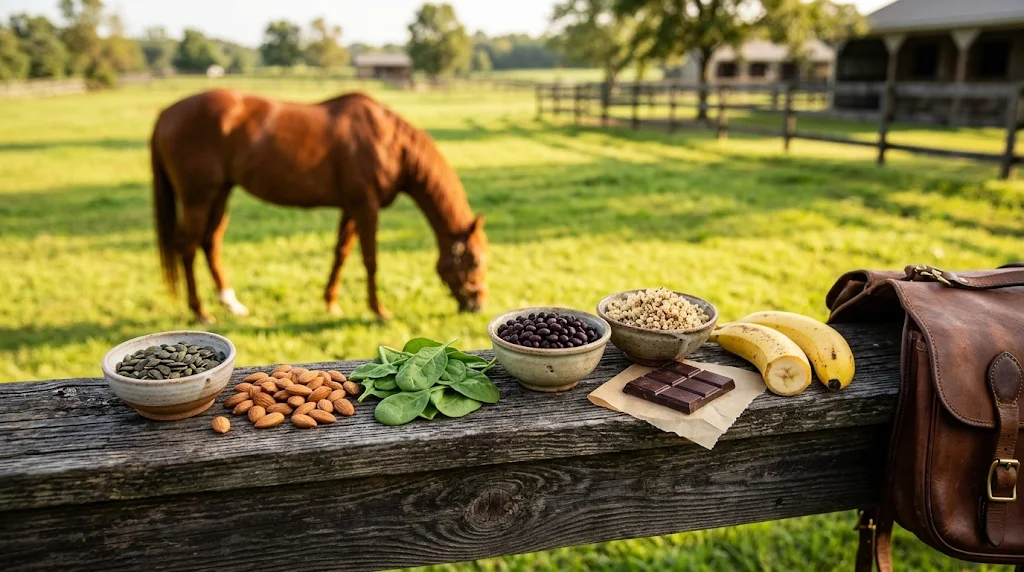
This article is about food for people. Horses have their own mineral needs, and their diet is built on forage and balanced rations. Don’t share your trail mix, seeds, or other human snacks with horses. Some human foods, such as avocado, chocolate, and onions, are unsafe for horses. If you wonder about your horse’s magnesium or mineral intake, ask your veterinarian or an equine nutritionist.
Conclusion
Magnesium rich foods include pumpkin seeds, chia, almonds, spinach, beans, quinoa, whole grains, and even dark chocolate and yogurt. The mineral contributes to normal muscle and nerve function and to energy metabolism, which is why it interests riders and other active people.
For most healthy adults, a varied diet with a few of these foods each day is the best approach. Avoid high-dose supplements unless a healthcare professional recommends them, keep your snacks away from the horses, and remember that no single nutrient replaces rest, hydration, and good training.
Source reference: USDA FoodData Central and the US National Institutes of Health, Office of Dietary Supplements. Values are typical averages and are approximate.
This article is for general information only and is not medical or dietary advice. Consult a qualified healthcare professional for personal guidance.
FAQ
1. Which food has the most magnesium?
Among common foods, pumpkin seeds are one of the richest, with about 156 mg in 28 g. Chia seeds, almonds, spinach, quinoa, and black beans are also strong sources.
2. How much magnesium do I need per day?
Adult men generally need about 400 to 420 mg and adult women about 310 to 320 mg, according to US recommendations. Needs differ by age, pregnancy, and country.
3. Does magnesium prevent muscle cramps?
Research does not clearly show that it prevents cramps in the general population. Cramps have many causes, so talk to a healthcare professional if they are frequent or severe.
4. Do I need a magnesium supplement if I ride or exercise a lot?
Most people can meet their needs with food. Supplements have an upper limit of 350 mg per day, and they may not be suitable for people with kidney conditions or certain medications, so ask a doctor or pharmacist first.
5. Can I give my horse magnesium-rich human snacks?
No. Horses have different nutritional needs, and some human foods are unsafe for them. Ask your veterinarian if you have questions about your horse’s minerals.