Why Is It Called Horsepower? The Surprising Origin
Cars, motorcycles, lawn mowers, and even air conditioners are measured in horsepower. But have you ever wondered why a unit of power is named after an animal? And how strong is a real horse? The story is smarter than you may think.
The Origin: James Watt
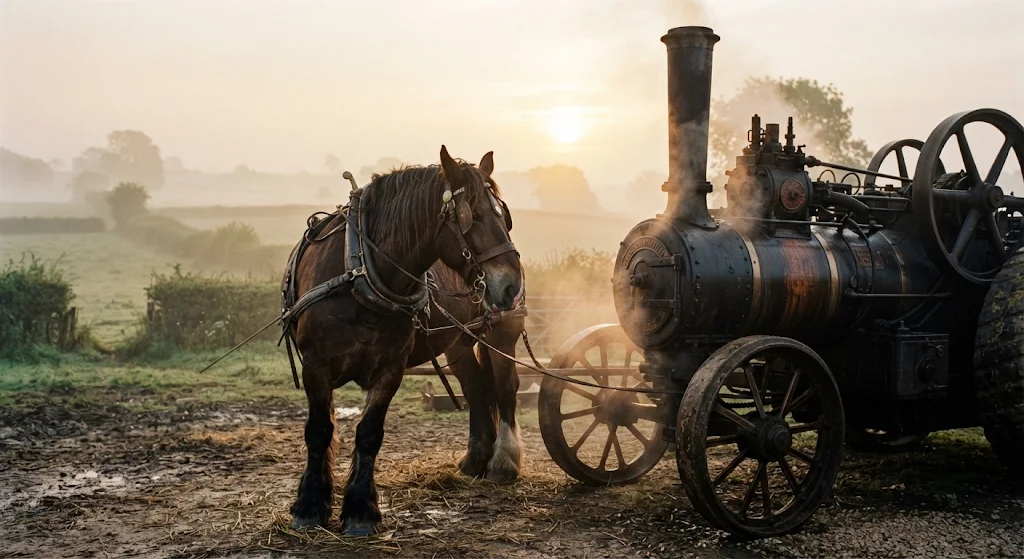
In the late 1700s, the Scottish engineer James Watt improved the steam engine. He had a marketing problem: how to convince people to buy his engines in a world where horses did much of the heavy work, such as turning mills and pumping water.
The solution was clever. He compared his engine to something his customers already understood, a horse. If an engine could do the work of several horses, buyers could easily see its value. That comparison gave birth to the term.
How Much Is One Horsepower?
Watt defined one horsepower as the ability to lift 33,000 pounds by one foot in one minute. In modern units, one mechanical horsepower is about 745.7 watts, or roughly three-quarters of a kilowatt. (A metric horsepower, used in some countries, is slightly different, at about 735.5 watts.)
How Did He Arrive at That Number?
The commonly told story is that Watt observed how much work a mill horse could do, walking in a circle to turn a mill, and then set a number that, by most accounts, was a little generous, so that nobody could say his engines fell short of the promise. The exact details of his measurements are debated by historians, but the idea of a practical, comparable unit is clear.
How Much Power Can a Real Horse Make?
This is the surprising part: a real horse can produce more than one horsepower.
- Sustained work: over long periods, a horse produces roughly around one horsepower.
- Short bursts: a fit horse can briefly produce much more, with estimates often cited around 10 to 15 horsepower at peak, though measurements vary by horse, method, and conditions.
So the unit is based on steady work, not on the peak output of a strong horse in a sprint.
Why Is It Still Used?
- It’s familiar. Everyone has an intuitive sense of a horse’s strength.
- It’s easy to compare. A 200 horsepower car sounds more powerful than a 100 horsepower car.
- Tradition and marketing. Car makers continue to use it worldwide, and many countries also use kilowatts officially.
Horsepower vs. Watts
- 1 mechanical horsepower ≈ 745.7 W
- 1 kilowatt ≈ 1.34 horsepower
Electric cars often list both numbers. If a motor is rated at 150 kW, that is about 201 horsepower.
Fun Facts
- Early steam engines were sold by counting the number of horses they could replace.
- The unit horsepower is related to the “brake horsepower” measurement used in engines.
- Horses still help work in some places, from farms to trails and tourism.
What It Teaches Us About Horses
The story says something nice about horses: for centuries, they powered cities, farms, and journeys, and when the industrial age came, their strength was the yardstick for new machines. That legacy lives in our language.
Caring for a Horse That Works
If you ask a horse to work, whether pulling, riding, or competing, remember its limits.
- Condition it gradually.
- Provide water, rest, and good nutrition.
- Use properly fitted equipment.
- Avoid heavy work in extreme heat.
- Check for lameness or fatigue, and consult a vet if needed.
Conclusion
Horsepower started as a sales pitch by James Watt, yet it became one of the most famous measurements in the world. One horsepower equals about 745.7 watts, and a real horse can briefly produce many times more. Next time you see a car’s horsepower figure, you will know the story behind it.
FAQ
1. Who invented horsepower?
James Watt, the Scottish engineer, in the late 1700s.
2. How much power does a real horse have?
Roughly one horsepower sustained, and much more in short bursts. Estimates vary.
3. How many watts is one horsepower?
About 745.7 watts for mechanical horsepower.