Why Do Horses Sleep Standing Up? The Surprising Truth
Walk into a quiet paddock at noon and you may see a horse with its head low, one hind leg softly bent, eyes half closed. It looks fast asleep, yet it is not falling over. How is that possible? The answer is one of the most clever bits of animal engineering you will ever meet.
The Secret: The Stay Apparatus
Horses have a special system of tendons, ligaments, and muscles called the stay apparatus. It lets the joints of the legs lock into place so the horse can stand with very little muscular effort. In the hind leg, the kneecap can hook over a bony ridge, a bit like a latch. This is why a dozing horse alternates which hind leg it rests: one leg rests while the other supports the weight.
The result is a horse that can doze for hours without getting tired. It is a bit like standing with your knees locked, except much more efficient.
Why Stand at All?
Horses are prey animals. In the wild, the safest answer to danger is to run, and a horse that is lying down needs extra seconds to get up. Sleeping standing allows an instant escape. Herds add another layer of safety: usually, some horses stay alert while others rest.
Standing Doze vs. Deep Sleep
Not all sleep is the same.
- Standing rest: light sleep or dozing. The horse is relaxed but can wake easily. This makes up much of a horse’s rest.
- Lying down: needed for REM sleep, the deep, dreaming stage. During REM, muscle tone drops sharply, which would make a standing horse collapse.
Horses sleep in short bouts spread across the day and night. In total they need only a few hours of actual sleep, and REM is a small part of it. Exact numbers vary by horse, age, and environment.
What Happens if a Horse Can’t Lie Down?
A horse that can never find a safe, comfortable place to lie down may become sleep deprived. In some cases, a horse may suddenly buckle at the knees or even collapse while dozing, as it slips into REM without lying down. If you see this, talk to a veterinarian, because it can also have other causes.
Signs of a Sleeping Horse
- Head low, neck relaxed
- A droopy lower lip
- Half-closed or closed eyes
- One hind leg resting, hip tilted
- Slow, deep breathing
Please don’t startle a sleeping horse. Speak softly as you approach, so it can wake gradually.
Helping Your Horse Sleep Well
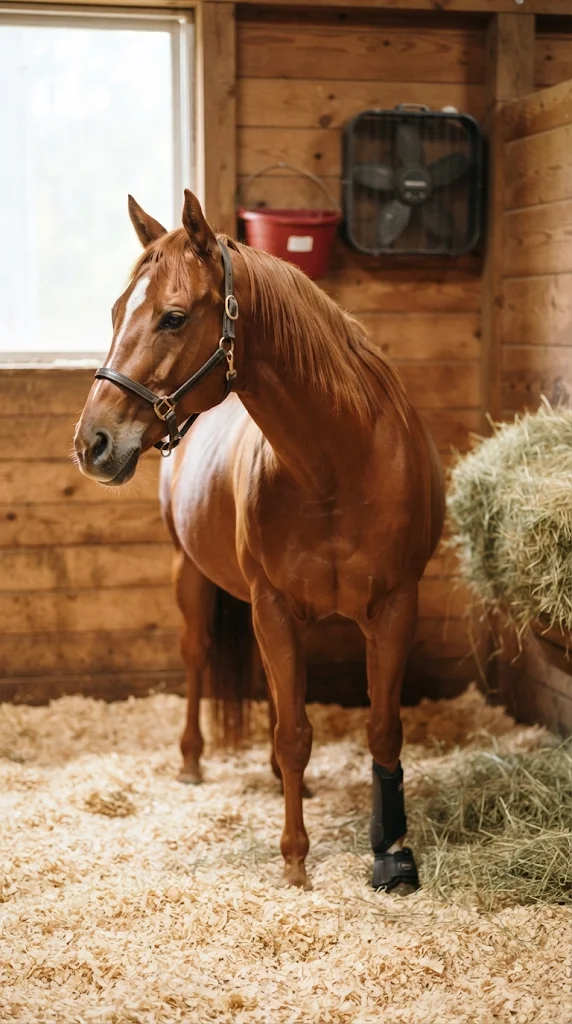
- Plenty of space and soft footing. A clean, dry, well-bedded stall or a comfortable pasture helps horses lie down.
- Companions. Horses feel safer when other horses are nearby.
- Quiet and routine. Predictability helps them relax.
- Good stall design. Enough room to lie down and get up without hitting walls.
- Check for discomfort. A horse that refuses to lie down, or lies down and struggles to rise, may be in pain.
If a horse is repeatedly lying down, rolling, sweating, or kicking at its belly, that can be a sign of colic. Call a veterinarian immediately.
Fun Facts
- Foals sleep much more than adults and lie down often.
- Horses in a group tend to nap at similar times.
- Horses can sleep lying flat on their side, but many prefer to rest on their chest.
Conclusion
Horses sleep standing up thanks to the stay apparatus, a natural locking system that keeps them safe and rested. They still need to lie down for deep REM sleep, so a calm, comfortable environment matters. Next time you see a horse dozing in the field, you will know exactly what is happening.
FAQ
1. Do horses ever lie down to sleep?
Yes. They lie down for short periods, usually for deep REM sleep, when they feel safe.
2. How many hours do horses sleep?
Only a few hours in total each day, in short bouts. It varies by age and situation.
3. Is it normal for a horse to doze standing in a field?
Yes, it is perfectly normal and a sign that the horse feels secure.