Healthy Recipe for Horse Riders: No-Bake Energy Bars
Riding looks calm from the outside, but anyone who has spent a full day in the saddle, or at the barn, knows how much it asks of the body. Balance, core strength, long hours outdoors, lifting feed buckets, tacking up, walking the horse out. By midday, plenty of riders are tired and hungry, and a bag of chips from the gas station is not always what they want.
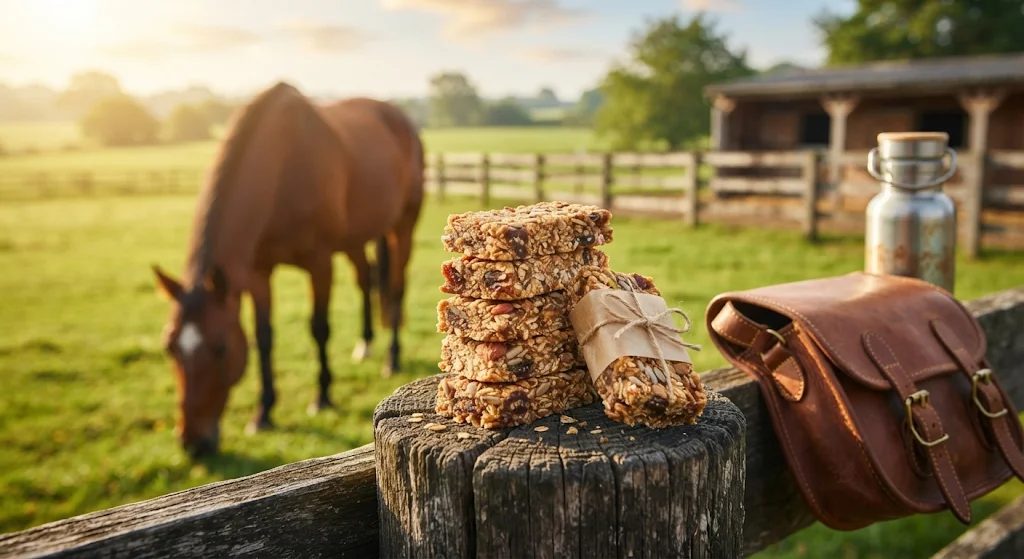
This guide offers a healthy recipe for horse riders: no-bake oat, date, and almond energy bars that are easy to make on a Sunday and easy to slip into a saddlebag, a barn tote, or a show-day cooler. Below you will find the recipe, nutrition for each ingredient, timing ideas for riding days, safety notes, and variations. Values are typical averages from USDA FoodData Central and are approximate. There are no tables, only short lists that are easy to read on a phone.
Why Riders Need Portable, Practical Food
Barn days rarely follow a schedule. A lesson runs late, a trail ride turns into a longer loop, or a show keeps you waiting between classes. Food that works for riders has a few things in common:
- Easy to carry. It should fit in a pocket, saddlebag, or tote without a fork or a plate.
- Easy to eat with one hand, or during a short break, with clean hands.
- A mix of carbohydrates, protein, and fat, so it keeps you going longer than a sugary snack.
- Not messy and not too heavy, since a very big meal right before riding is uncomfortable.
- Stable at barn temperatures, at least for a few hours.
These bars meet most of those needs, and they cost much less than packaged energy bars.
Ingredients
Makes 12 bars (8 x 8 inch / 20 x 20 cm pan).
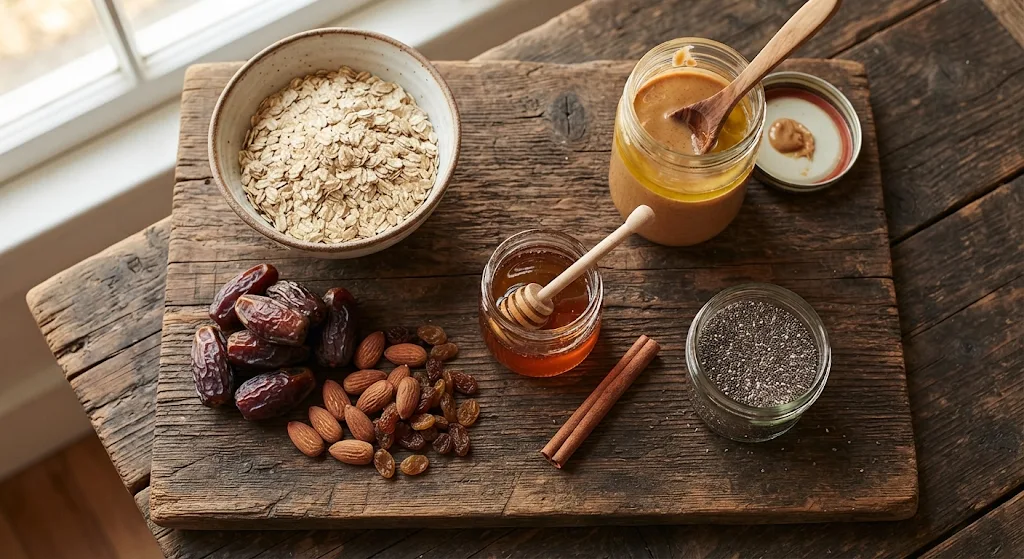
- 150 g rolled oats (about 1½ cups)
- 200 g pitted Medjool dates (about 8 dates)
- 120 g natural peanut butter (about ½ cup)
- 60 g almonds, roughly chopped
- 60 g raisins
- 2 tablespoons (24 g) chia seeds
- 2 tablespoons (42 g) honey
- 1 teaspoon ground cinnamon
- A pinch of salt
Nutrition by Ingredient
Here is what each ingredient adds to the whole recipe.
Rolled oats (150 g)
- Calories: about 569 kcal
- Protein: about 19.8 g
- Fiber: about 15.2 g
- Main value: slow-digesting carbohydrates and beta-glucan fiber
Medjool dates (200 g)
- Calories: about 554 kcal
- Protein: about 3.6 g
- Fiber: about 13.4 g
- Main value: natural sugars for quick energy, plus potassium
Natural peanut butter (120 g)
- Calories: about 706 kcal
- Protein: about 30.1 g
- Fiber: about 7.1 g
- Main value: fats and plant protein
Almonds (60 g)
- Calories: about 347 kcal
- Protein: about 12.7 g
- Fiber: about 7.5 g
- Main value: vitamin E, magnesium, and crunch
Raisins (60 g)
- Calories: about 179 kcal
- Protein: about 1.9 g
- Fiber: about 2.2 g
- Main value: natural sugars
Chia seeds (24 g)
- Calories: about 117 kcal
- Protein: about 4.0 g
- Fiber: about 8.3 g
- Main value: fiber and plant omega-3 fats
Honey (42 g)
- Calories: about 128 kcal
- Protein: about 0.1 g
- Fiber: about 0.1 g
- Main value: binds the bars and adds sweetness
Total for the whole recipe
- Calories: about 2,600 kcal
- Protein: about 72.2 g
- Fiber: about 53.8 g
Per bar (1 of 12)
- Calories: about 217 kcal
- Protein: about 6.0 g
- Fiber: about 4.5 g
Values are approximate and vary by brand, size, and preparation. This information is for general reference and is not medical or dietary advice.
What a Bar Provides
Carbohydrates. Oats, dates, and raisins supply most of the energy. Oats are digested slowly, while dates and raisins give a quicker source of sugar. This mix is useful on a long day.
Protein. About 6 g per bar, from peanut butter, almonds, and oats. Protein contributes to the maintenance of normal muscle mass as part of a balanced diet.
Fats. Peanut butter and almonds provide mostly unsaturated fat, which slows digestion and helps with fullness.
Fiber. About 4.5 g per bar contributes to normal digestive function. If you are not used to this much fiber, start with half a bar.
Minerals. Potassium from dates, magnesium from oats and almonds, and vitamin E from almonds contribute to normal muscle function and energy metabolism.
How to Make Them
1. Prepare the pan
Line an 8 x 8 inch (20 x 20 cm) pan with parchment paper, leaving some paper hanging over two sides to lift the bars out later.
2. Process the dates
If the dates are firm, soak them in warm water for 10 minutes and drain. Place them in a food processor and blend until they form a sticky paste. If you don’t have a food processor, chop them very finely and mash them with a fork.
3. Mix the base
In a large bowl, combine the peanut butter, honey, cinnamon, and salt. Stir until smooth. Warm the peanut butter for 15 seconds in the microwave if it is stiff.
4. Combine
Add the date paste, oats, chopped almonds, raisins, and chia seeds. Mix with a sturdy spoon or your hands until the mixture is evenly sticky and holds together when pressed. If it is too dry, add a teaspoon of warm water. If it is too wet, add a spoonful of oats.
5. Press
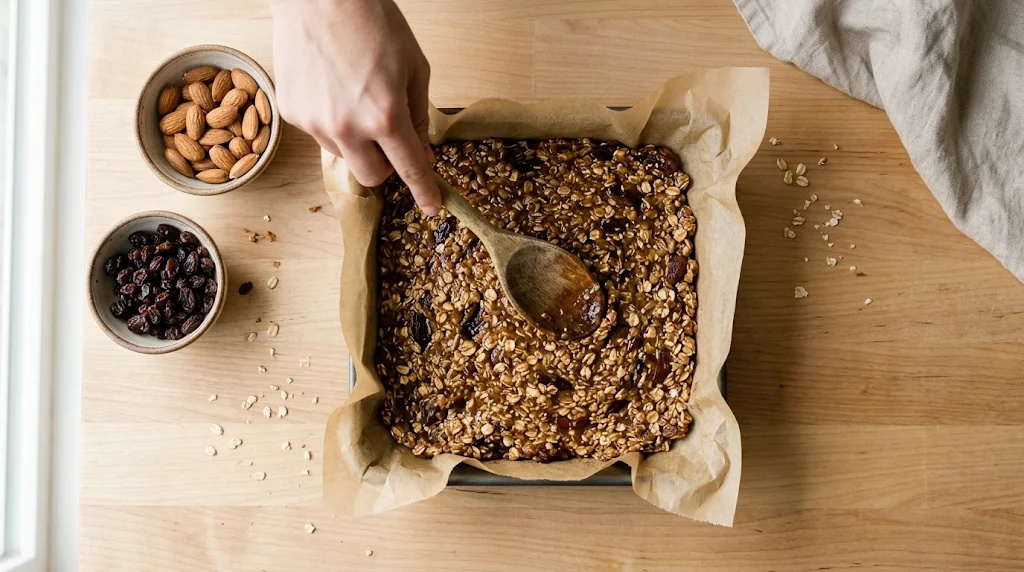
Transfer the mixture to the pan and press down firmly and evenly. Use the back of a spoon or a flat-bottomed glass. Pressing well is what keeps the bars from crumbling.
6. Chill and cut
Refrigerate for at least 1 hour, until firm. Lift out with the parchment, place on a cutting board, and cut into 12 bars with a sharp knife.
Tips for Bars That Hold Together
Press very firmly. Loose packing is the main cause of crumbly bars.
Use sticky dates. Soft, fresh dates bind better than dry ones.
Chill before cutting. Cold bars slice cleanly.
Use natural peanut butter. Stir it well first so the oil is evenly mixed.
Wrap bars individually. Small pieces of wax paper or parchment make them easy to grab and keep them from sticking.
Chop the almonds well. Large pieces can make the bars break apart.
When to Eat Them on Riding Days
People digest food differently, so treat these as general starting points and adjust for yourself.
- 1 to 2 hours before riding: a full bar with a banana or water is a common choice for many people.
- During a long day or trail ride: eat a few bites, or half a bar, at a halt, when the horse is standing calmly and you have clean hands. Eating while moving can be a choking hazard.
- Between show classes: a bar and plenty of water, away from the warm-up ring.
- After riding: pair a bar with yogurt, milk, or fruit for a recovery snack.
Always bring water. A snack helps, but hydration matters just as much on warm or long days.
Rider-Friendly Food Habits
- Don’t ride on an empty stomach if it makes you light-headed. A small snack beforehand is better than skipping.
- Avoid very heavy or greasy meals right before riding. They can feel uncomfortable.
- Plan ahead for show days. Pack food the night before, so you are not depending on a snack stand.
- Carry a reusable bottle and refill it often.
- Keep your hands clean. Use hand sanitizer or wipes before eating, since you handle tack, feed, and animals.
- Store food away from horses. Keep your bag in the tack room or truck, not in the aisle where curious noses can reach it.
Safety Note: These Bars Are for Riders, Not Horses
These bars are made for people. Don’t share them with horses. Several of the ingredients, such as peanut butter and honey, are not designed for equine diets, and horses have their own nutritional needs. Many human foods are unsafe for horses, including avocado, chocolate, onions, and garlic. If you want a treat for your horse, use a recipe made specifically for horses and check with your veterinarian. Also, dispose of wrappers properly so that horses and other animals cannot swallow them.
Easy Variations
- Nut-free: Replace peanut butter with sunflower seed butter, and almonds with pumpkin seeds. Check labels.
- Cranberry and orange: Use dried cranberries instead of raisins and add the zest of one orange.
- Chocolate: Add 40 g of dark chocolate chips. In hot weather, store the bars in a cooler so they don’t melt.
- Coconut: Stir in 30 g of unsweetened shredded coconut.
- Extra protein: Add 2 tablespoons of protein powder and a splash of water if needed.
- Gluten-free: Use oats labeled gluten-free.
- Lighter bars: Use half the raisins and skip the honey.
- Different butters: Almond butter or cashew butter work well in place of peanut butter.
Storage and Make-Ahead Tips
- Refrigerator: Store in an airtight container for up to 1 week.
- Freezer: Wrap individual bars and freeze for up to 3 months. Take one out in the morning, and it will be thawed by mid-morning.
- At the barn: Bars soften in the heat. Use an insulated bag with an ice pack on hot days, and don’t leave them in a closed truck or car for hours.
- Food safety: Use clean hands and tools when preparing, wash dates and dried fruit if needed, and throw away any bars that smell sour or look unusual.
- Weekly routine: Many riders make a batch on Sunday and have snacks ready for the week.
Who Should Be Careful
- Peanut or tree nut allergies: Use seed butters and seeds, and check labels for cross-contamination.
- Diabetes or blood sugar concerns: The bars contain natural sugars and carbohydrates. Ask a healthcare professional about portions.
- Kidney conditions: Dates, almonds, and peanut butter contain potassium and phosphorus, so people on restricted diets should ask for guidance.
- Digestive sensitivity: The fiber content can cause bloating if you are not used to it.
- Children: Whole nuts can be a choking hazard for young children. Chop them finely or use seed butters.
- Special diets and medications: Ask a qualified professional before changing your eating pattern.
Simple Ways to Enjoy Them
- Packed in a saddlebag for a trail ride.
- As a quick breakfast with a cup of tea or coffee before heading to the barn.
- Crumbled over yogurt as a post-ride snack.
- In your show-day bag with fruit and water.
- Cut into small squares and shared at a barn gathering (for people only).
Conclusion
A healthy recipe for horse riders should be easy to carry, simple to make, and balanced enough to keep you going. These no-bake oat, date, and almond bars give about 217 kcal, 6 g of protein, and 4.5 g of fiber each, with a mix of slow and quick carbohydrates and healthy fats.
Make a batch, wrap them individually, bring water, and eat them in safe moments, never while moving. Keep them away from the horses, and choose a horse-specific treat when you want to reward your partner. Like any snack, they work best as part of a varied diet and do not guarantee performance.
Source reference: USDA FoodData Central. Values are typical averages and are approximate.
This article is for general information only and is not medical or dietary advice. Consult a qualified healthcare professional for personal guidance.
FAQ
1. What should riders eat before a ride?
There is no single answer. Many people prefer a light snack with carbohydrates and a little protein 1 to 2 hours before, such as a bar and a banana, and a smaller bite if the ride is sooner. Try different options on easy days.
2. Can I eat these bars while riding?
It is safer to eat at a halt, when your horse is standing calmly and you have a free hand. Eating on the move can be a choking hazard and can distract you.
3. How many calories are in one bar?
About 217 kcal per bar, with 6 g of protein and 4.5 g of fiber, when the recipe is cut into 12 bars.
4. Can horses eat these energy bars?
No. They are made for people. Horses have different dietary needs, and some human foods are unsafe for them. Use treats made for horses and ask your veterinarian.
5. How long do the bars last?
Up to 1 week in the fridge in an airtight container, and up to 3 months in the freezer. In warm weather, carry them in an insulated bag.