
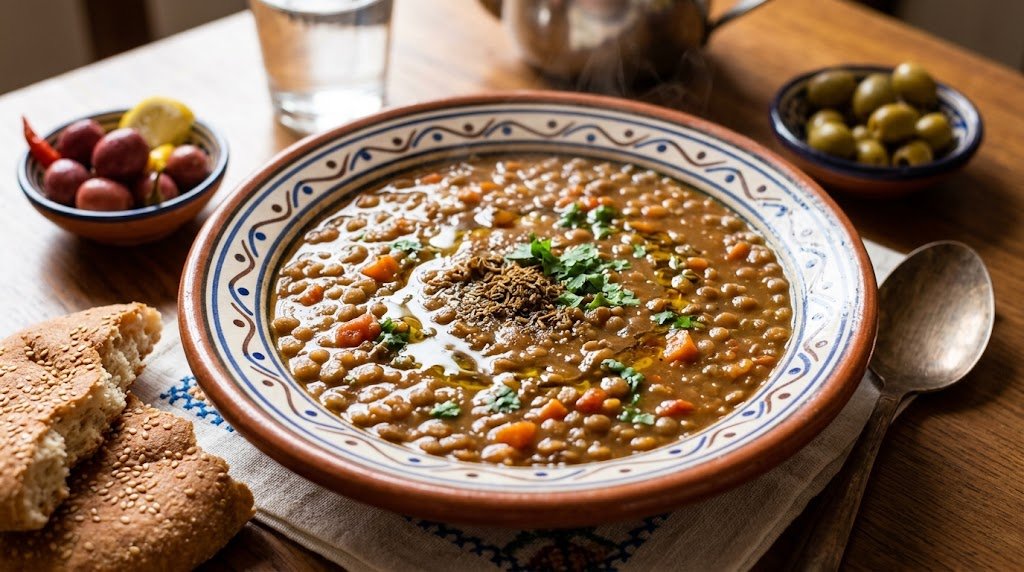
Lentils Nutrition Facts: Protein, Fiber, Iron per 100 g
Lentils are one of the oldest cultivated foods in the world, and they remain a staple in kitchens from India and the Middle East to Europe and North Africa. They are cheap, they cook quickly compared with most dried beans, and they fit into soups, salads, curries, and stews. Anyone looking at plant-based protein sources sooner or later asks the same questions: how much protein is in lentils, how many carbs do they contain, and what else do they offer?
This guide covers the lentils nutrition facts you are likely to need, with tables per 100 g and per serving, a comparison with other foods, and practical advice for cooking, storing, and eating them safely. All values are typical averages and are approximate.
Nutrition Facts per 100 g
The table below shows boiled lentils, without added salt, which is the way most people eat them. Dry lentils have much higher numbers per 100 g because they contain no water, so always check whether a value refers to raw or cooked food.
| Nutrient | Amount per 100 g (boiled) | Notes |
|---|---|---|
| Calories | about 116 kcal | Dry lentils are about 352 kcal per 100 g |
| Protein | about 9.0 g | Dry lentils are about 24.6 g per 100 g |
| Carbohydrates | about 20.1 g | Mostly starch |
| Sugars | about 1.8 g | Naturally occurring |
| Fiber | about 7.9 g | Both soluble and insoluble |
| Total fat | about 0.4 g | Very low |
| Saturated fat | about 0.05 g | |
| Potassium | about 369 mg | |
| Iron | about 3.3 mg | Non-heme (plant) iron |
| Folate (B9) | about 181 µg | |
| Phosphorus | about 180 mg | |
| Magnesium | about 36 mg | |
| Zinc | about 1.3 mg | |
| Thiamin (B1) | about 0.17 mg | |
| Vitamin B6 | about 0.18 mg | |
| Sodium | about 2 mg | Without added salt |
Values vary by variety (brown, green, red, black), brand, and preparation.
Nutrition Facts per Common Serving
| Serving (boiled lentils) | Calories | Protein | Carbs | Fat | Fiber |
|---|---|---|---|---|---|
| 100 g | 116 kcal | 9.0 g | 20.1 g | 0.4 g | 7.9 g |
| ½ cup (about 99 g) | 115 kcal | 8.9 g | 19.9 g | 0.4 g | 7.8 g |
| 1 cup (about 198 g) | 230 kcal | 17.9 g | 39.9 g | 0.8 g | 15.6 g |
One practical point: ½ cup of dry lentils (about 96 g) makes roughly 1½ cups of cooked lentils, because the lentils absorb water and about double or triple in weight.
Protein Content and Quality
Boiled lentils provide about 9 g of protein per 100 g, which is high for a plant food. They contain all nine essential amino acids, but in lower amounts of methionine than animal foods. For this reason lentils are often described as an “incomplete” protein on their own. In practice, this is easy to balance. Eating lentils alongside grains such as rice, bread, or couscous throughout the day supplies a good mix of amino acids.
Here is how lentils compare with other foods, per 100 g cooked:
| Food (cooked) | Calories | Protein | Fiber |
|---|---|---|---|
| Lentils (boiled) | about 116 kcal | about 9.0 g | about 7.9 g |
| Chickpeas (boiled) | about 164 kcal | about 8.9 g | about 7.6 g |
| Black beans (boiled) | about 132 kcal | about 8.9 g | about 8.7 g |
| Chicken breast (skinless) | about 165 kcal | about 31 g | 0 g |
In a lentils vs chicken protein comparison, chicken gives far more protein per 100 g, but lentils provide fiber, carbohydrates, and folate that chicken lacks. Lentils are also much lower in cost. The two foods serve different roles on a plate, and many people enjoy both.
Carbohydrates, Fats, and Fiber
Carbohydrates. Most of the energy in lentils comes from starch, about 20 g per 100 g cooked. This starch is digested relatively slowly, because it is packaged with fiber and protein.
Fiber. At about 7.9 g per 100 g, lentils are among the richest everyday sources of dietary fiber. They contain both soluble fiber, which dissolves in water and forms a gel, and insoluble fiber, which adds bulk. A cup of cooked lentils provides about 15.6 g, which is more than half of the fiber amount that many public health guidelines mention for a day.
Fats. Lentils contain almost no fat, less than 0.5 g per 100 g. They are naturally free of cholesterol, like all plant foods.
Vitamins and Minerals
Lentils stand out for several micronutrients:
- Folate (about 181 µg): contributes to normal cell division and blood formation. A cup of lentils supplies a large share of the daily amount generally recommended for adults.
- Iron (about 3.3 mg): contributes to oxygen transport. Plant iron is absorbed less efficiently than iron from meat, but eating lentils with a vitamin C source, such as tomatoes, lemon juice, or peppers, helps.
- Potassium (about 369 mg): contributes to normal muscle and nerve function and fluid balance.
- Phosphorus (about 180 mg): contributes to bones and energy metabolism.
- Magnesium (about 36 mg) and zinc (about 1.3 mg): contribute to muscle function and immune function respectively.
- Thiamin (B1) and vitamin B6: contribute to energy metabolism and the nervous system.
Potential Benefits
As part of a varied diet, lentils may support healthy eating habits in these ways:
- They are a good source of plant protein with very little fat.
- Their fiber content contributes to normal digestive function and to feeling full after meals.
- They provide folate and iron, which are nutrients of interest in many diets.
- Their slow-digesting carbohydrates make them a steady source of energy.
- They are inexpensive, shelf-stable, and easy to prepare.
No single food determines health outcomes. The benefits depend on the whole diet and on individual needs.
How Cooking Changes Its Nutrition
- Boiling: The standard method. Lentils absorb water, which lowers calories and protein per 100 g compared with the dry weight. Some water-soluble vitamins, such as folate, can leach into the water, so using the cooking liquid in soups or stews keeps those nutrients.
- Soaking: Not required for lentils, unlike most beans. A short soak of 1 to 2 hours may shorten cooking time and may make them easier to digest for some people.
- Pressure cooking: Fast and gentle, often 8 to 12 minutes for brown or green lentils.
- Adding oil or meat: Changes the calories significantly. One tablespoon of olive oil adds about 120 kcal.
Cooking guide: Rinse the lentils and pick out any stones. Use about 2½ to 3 cups of water per cup of dry lentils. Brown and green lentils take 20 to 30 minutes, while red and yellow lentils break down in 10 to 15 minutes. Add salt toward the end. Add acidic ingredients like tomatoes or lemon after the lentils are tender, since acid can slow softening.
How to Choose, Store, and Prepare It
Choosing: Pick lentils that are uniform in color and size, without cracks, dust, or signs of insects. Different varieties suit different dishes: green and brown hold their shape in salads, red lentils melt into soups, and black beluga lentils stay firm.
Storing dry lentils: Keep them in an airtight container in a cool, dark, dry place. They stay good for a year or longer, though older lentils may need a little more cooking time.
Storing cooked lentils: Cool them quickly and refrigerate within 2 hours. They keep for 3 to 5 days in an airtight container. You can freeze them for up to 3 months.
Canned lentils: Convenient and fully cooked. Rinse them under water to remove much of the added sodium.
Food safety: Always cook dry lentils fully. Reheat leftovers until steaming hot, and don’t leave them at room temperature for long periods.
Who Should Be Careful
- Legume allergy: Some people are allergic to lentils or related legumes, such as peanuts and chickpeas. Anyone with a known allergy should avoid them.
- Digestive sensitivity: Lentils contain fermentable carbohydrates that can cause gas or bloating, especially if you are not used to them. Increasing the portion gradually and rinsing canned lentils may help. People with irritable bowel syndrome may want guidance from a dietitian.
- Kidney conditions: Lentils contain potassium and phosphorus, which some people with kidney disease are advised to limit. A doctor can provide personal guidance.
- Gout: Lentils contain moderate purines. People advised to limit purines should ask their healthcare professional.
- Iron or folate supplements: Anyone taking supplements or following a special medical diet should check with a professional before making big changes.
Simple Ways to Eat It
- Lentil soup with onion, carrot, cumin, and a squeeze of lemon.
- Warm lentil salad with olive oil, parsley, tomatoes, and a little feta or olives.
- Lentils and rice (a classic pairing that also balances the amino acids).
- Stew or curry with garlic, ginger, and spices, served with flatbread.
- Stuffed or blended: Use cooked lentils in veggie patties, wraps, or as a filling for peppers.
Conclusion
The lentils nutrition facts tell a clear story: about 116 kcal, 9 g of protein, 20 g of carbohydrates, and almost 8 g of fiber per 100 g boiled, with very little fat and useful amounts of folate, iron, and potassium. They are affordable, versatile, and easy to cook.
Pair them with a vitamin C source to improve iron absorption, combine them with grains for a fuller amino acid profile, and increase your portions gradually if you’re not used to legumes. As with any food, they work best as part of a varied diet.
Source reference: USDA FoodData Central. Values are typical averages and are approximate.
This article is for general information only and is not medical or dietary advice. Consult a qualified healthcare professional for personal guidance.
FAQ
1. How much protein is in lentils per 100 g?
Boiled lentils contain about 9 g of protein per 100 g. Dry, uncooked lentils contain about 24.6 g per 100 g, because they haven’t absorbed water yet.
2. How many calories are in cooked lentils?
About 116 kcal per 100 g and about 230 kcal per cup (198 g) of boiled lentils without added oil. Added fats or other ingredients will increase this.
3. Are lentils a complete protein?
They contain all nine essential amino acids but are lower in methionine, so they are often called incomplete. Eating them with grains such as rice or bread over the course of the day gives a good balance.
4. Do I need to soak lentils before cooking?
No. Unlike most dried beans, lentils cook fairly quickly without soaking. A short soak is optional and may slightly reduce cooking time.
5. Why do lentils sometimes cause gas?
They contain fermentable fibers and carbohydrates that gut bacteria break down. Eating smaller portions at first, cooking them thoroughly, and rinsing canned lentils can make them easier to tolerate.





2 Comments