Healthy Breakfast Before the Stables: Easy Overnight Oats
Early mornings at the barn have their own rhythm. Feeding, grooming, mucking out, riding, and plenty of walking all happen before most people have finished their first coffee. If you spend time around horses, you know that a rushed breakfast, or none at all, can leave you tired and hungry by mid-morning.
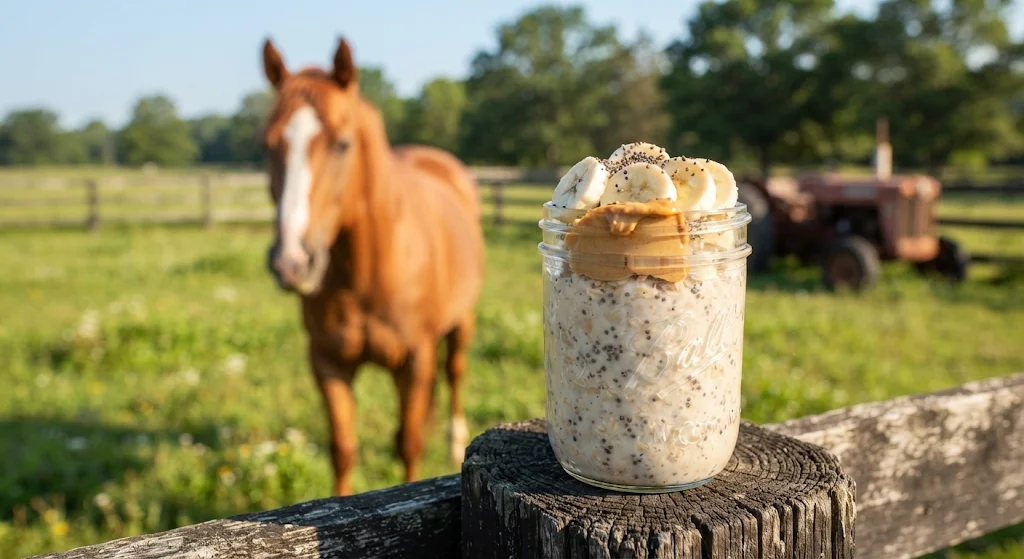
This guide offers a healthy breakfast before the stables that you can prepare the night before: creamy overnight oats with banana, Greek yogurt, peanut butter, and chia seeds. It is filling, easy to carry, and needs no cooking. Below you will find the recipe, nutrition for each ingredient, timing tips for active mornings, and easy variations. Values are typical averages from USDA FoodData Central and are approximate. There are no tables, just short lists that are easy to read on a phone.
Why Overnight Oats Work for Busy, Active Mornings
Overnight oats are simply oats soaked in milk or yogurt in the fridge. By morning they are soft, creamy, and ready to eat cold. They suit a barn day for several practical reasons:
- Zero morning effort. You prepare them the night before, and in the morning you just grab the jar.
- Portable. A jar fits in a bag, a cooler, or a truck cup holder.
- Balanced. Oats provide carbohydrates, yogurt and milk add protein, peanut butter and chia add fat and fiber.
- Easy on the stomach for many people. Soaked oats are soft, and the meal is mild.
- Flexible. You can change toppings and sweetness to your taste.
Ingredients
Makes 2 jars (2 servings).
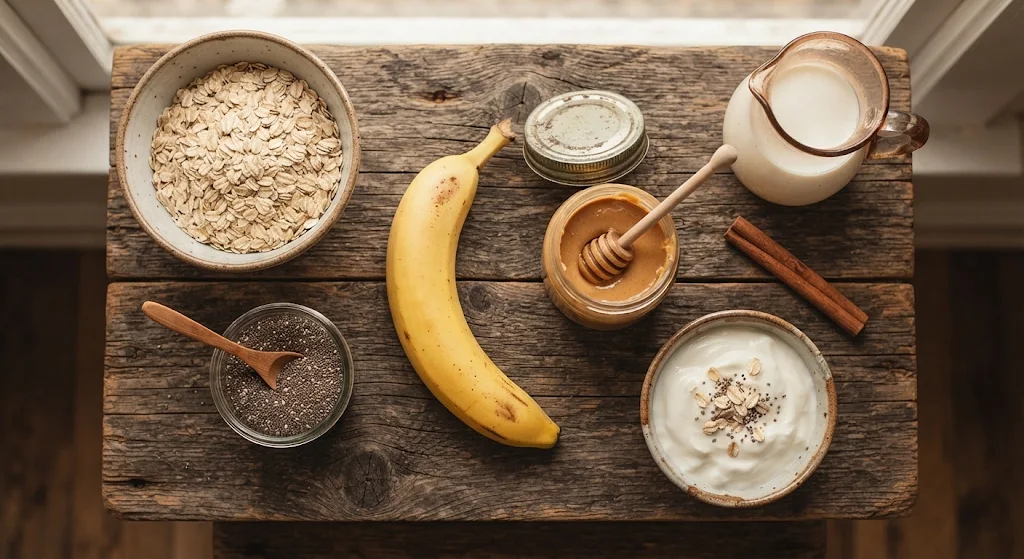
- 80 g rolled oats (about 1 cup)
- 240 ml whole milk (1 cup), or milk of your choice
- 120 g plain Greek yogurt, 2% fat (about ½ cup)
- 2 tablespoons (32 g) peanut butter
- 1 medium ripe banana (about 118 g), half mashed into the oats and half sliced for the top
- 1 tablespoon (12 g) chia seeds
- ½ teaspoon ground cinnamon
- Optional: 1 teaspoon honey per jar (about 21 kcal each)
- Optional topping: a few chopped almonds or a handful of berries
Nutrition by Ingredient
Here is what each ingredient adds to the whole recipe.
Rolled oats (80 g, dry)
- Calories: about 303 kcal
- Protein: about 10.6 g
- Fiber: about 8.1 g
- Main value: slow-digesting carbohydrates and beta-glucan fiber
Whole milk (240 ml)
- Calories: about 149 kcal
- Protein: about 7.7 g
- Fiber: 0 g
- Main value: protein and calcium
Plain Greek yogurt, 2% (120 g)
- Calories: about 88 kcal
- Protein: about 11.9 g
- Fiber: 0 g
- Main value: protein and calcium
Peanut butter (2 tablespoons, 32 g)
- Calories: about 188 kcal
- Protein: about 8.0 g
- Fiber: about 2.0 g
- Main value: fats and plant protein
Banana (1 medium, 118 g)
- Calories: about 105 kcal
- Protein: about 1.3 g
- Fiber: about 3.1 g
- Main value: natural sugars and potassium (about 420 mg)
Chia seeds (1 tablespoon, 12 g)
- Calories: about 58 kcal
- Protein: about 2.0 g
- Fiber: about 4.1 g
- Main value: fiber and plant omega-3 fats
Total for the whole recipe
- Calories: about 891 kcal
- Protein: about 41.5 g
- Fiber: about 17.3 g
Per serving (one jar)
- Calories: about 446 kcal
- Protein: about 20.8 g
- Fiber: about 8.7 g
Values are approximate and vary by brand, size, and preparation. This information is for general reference and is not medical or dietary advice.
What This Breakfast Provides
Carbohydrates for energy. Oats and banana supply most of the carbohydrates. Oats are digested slowly because of their fiber, while banana adds a quicker source of sugar. Together they give a mix of steady and quick fuel.
Protein. About 21 g per jar. It comes from yogurt, milk, oats, and peanut butter. Protein contributes to the maintenance of normal muscle mass as part of a balanced diet.
Fats and fiber. Peanut butter and chia add fats and fiber, which make the breakfast more filling and slower to digest. That is helpful for a long morning, but it is also the reason you may want a lighter option right before hard physical effort (see below).
Vitamins and minerals. Potassium from banana and milk, magnesium and manganese from oats, calcium from dairy, and B vitamins from oats all contribute to normal muscle function and energy metabolism.
Timing: When Should You Eat It?
There is no single right answer, because people digest food differently. These general ideas are common starting points:
- 2 to 3 hours before riding or heavy work: a full jar is usually comfortable for most people.
- About 1 hour before: a smaller portion, such as half a jar, or a banana with a spoonful of yogurt, is lighter.
- Less than 30 minutes before: most people prefer something very light and easy to digest, like a banana or a few dates.
- After the session: the same oats make a good recovery breakfast, especially with extra yogurt.
Pay attention to how your body reacts, and adjust. Drink water too, since you may be outdoors for hours.
How to Make It
1. Mash the banana
Mash half of the banana in a bowl with a fork until it is mostly smooth. Slice the other half and keep it for the top.
2. Mix the base
Add the oats, milk, yogurt, peanut butter, chia seeds, and cinnamon. Stir well until the peanut butter is mixed in and no dry oats remain. If you like sweetness, add the honey now.
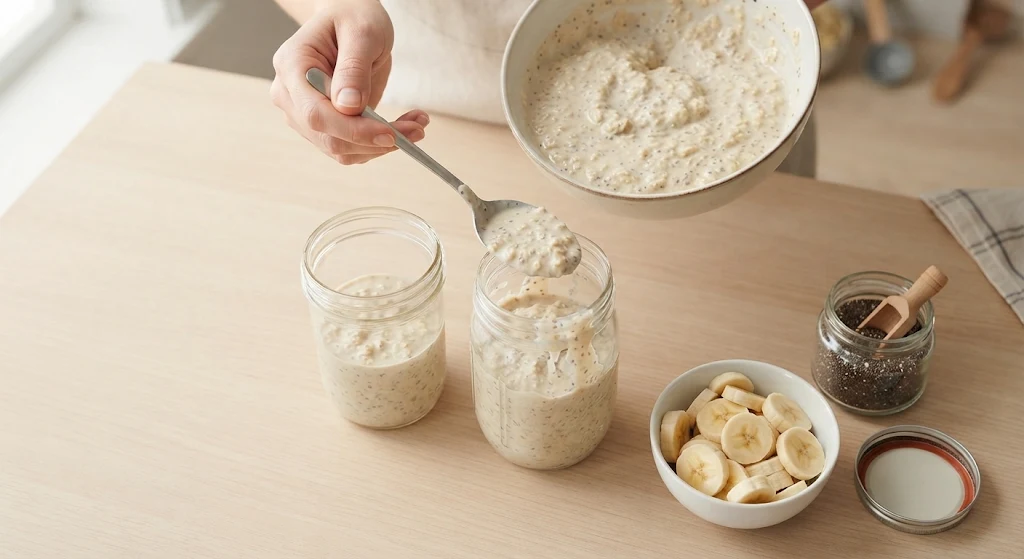
3. Divide into jars
Spoon the mixture into two jars or containers with lids, about 300 ml each. Tap gently to remove air bubbles.
4. Chill overnight
Cover and refrigerate for at least 4 hours, ideally 8 to 12 hours. The oats will absorb the liquid and soften, and the chia seeds will thicken the mixture.
5. Top and go
In the morning, stir, adjust the thickness with a splash of milk if needed, and top with the banana slices, almonds, or berries. Eat cold, or warm it for 1 minute in the microwave.
Tips for the Best Texture
Use rolled oats. Quick oats turn mushy, and steel-cut oats stay too firm without cooking.
Stir the peanut butter in well. A thin layer of melted peanut butter evenly distributed gives the best flavor.
Adjust the liquid. For a looser texture, add 2 to 3 tablespoons of milk in the morning. For a thicker one, use less milk or more yogurt.
Add banana slices at the end. Slices added the night before can darken and soften.
Use a jar with a tight lid. It keeps the mixture fresh and prevents spills in a bag.
Variations
- Dairy-free: Use oat or soy milk and a plant-based yogurt.
- Nut-free: Replace the peanut butter with sunflower seed butter.
- Apple and cinnamon: Swap the banana for grated apple and add extra cinnamon.
- Berry version: Add a handful of blueberries or strawberries.
- Chocolate: Stir in 1 teaspoon of unsweetened cocoa powder.
- Extra protein: Add a scoop of protein powder or increase the yogurt.
- Lighter version: Use half the oats and skip the peanut butter.
- Warm version: Heat the jar for 1 to 2 minutes and stir.
Storage and Make-Ahead Tips
- Refrigerator: Keep the sealed jars cold for up to 3 days. Add fresh fruit on the day you eat them.
- Meal prep: Make 4 to 6 jars on Sunday for the week, leaving toppings separate.
- Freezer: Freeze without banana slices for up to 2 months. Thaw overnight in the fridge.
- Carrying: Keep the jar cold with an ice pack if you will be outside in warm weather. Dairy should not stay above 40°F (4°C) for more than 2 hours, or 1 hour in hot weather.
- Food safety: Use clean jars, wash your hands before preparing, and discard any jar that smells sour or looks unusual.
Who Should Be Careful
- Peanut, dairy, or gluten allergies: Oats are often processed alongside wheat, so choose oats labeled gluten-free if needed. Peanut and dairy allergies need substitutions.
- Diabetes or blood sugar concerns: The recipe contains carbohydrates and natural sugar. Ask a healthcare professional about portions.
- Kidney conditions: Banana, milk, and peanut butter contain potassium and phosphorus, so people on restricted diets should seek personal advice.
- Sensitive stomachs: Large amounts of fiber may cause bloating if you are not used to them. Start with a smaller jar.
- Intense exercise: Some people need a lighter meal before hard effort. Test what works for you on easy days first.
- Special diets or medications: Ask a qualified professional before changing your eating pattern.
Simple Ways to Eat It
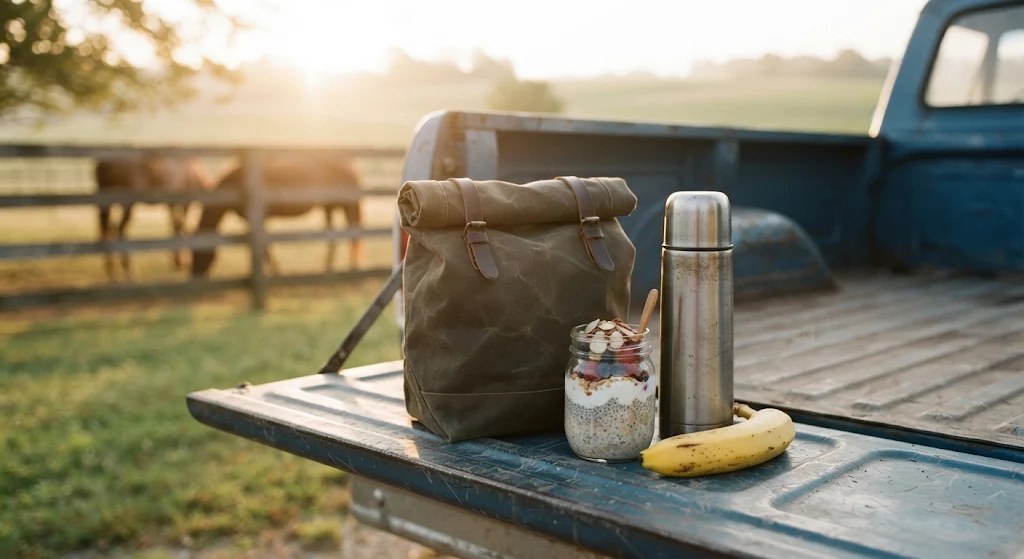
- Straight from the jar in the truck or on the way to the barn.
- Warmed with a pinch of cinnamon on a cold morning.
- As a recovery breakfast after a morning session.
- In a bowl topped with sliced banana, nuts, and seeds.
- Packed with a thermos of tea or coffee.
Conclusion
A healthy breakfast before the stables should be easy, filling, and ready when you are. These overnight oats provide about 446 kcal, around 21 g of protein, and almost 9 g of fiber per jar, with carbohydrates from oats and banana and fats from peanut butter and chia.
Make a few jars at night, adjust the portion size to the kind of morning ahead, and listen to your body. Like any breakfast, it works best as part of a varied diet, and it is not a treatment or a guarantee of performance.
Source reference: USDA FoodData Central. Values are typical averages and are approximate.
This article is for general information only and is not medical or dietary advice. Consult a qualified healthcare professional for personal guidance.
FAQ
1. Can I eat overnight oats before exercise?
Many people do. A full jar is usually comfortable 2 to 3 hours before, and a smaller portion works closer to the activity. Everyone digests differently, so test it on an easy day.
2. How long do overnight oats last in the fridge?
About 3 days in a sealed jar. Add fresh fruit on the day you eat them, because sliced banana darkens and softens.
3. How much protein is in one jar?
About 21 g per jar, using whole milk, Greek yogurt, peanut butter, oats, and chia. It changes with the milk, yogurt, and any protein powder you add.
4. Can I make this without peanut butter?
Yes. Use sunflower seed butter, almond butter, or skip it. The jar will have fewer calories and a little less protein.
5. Do I have to eat it cold?
No. You can warm it in the microwave for 1 to 2 minutes, stirring halfway, and add a splash of milk.