
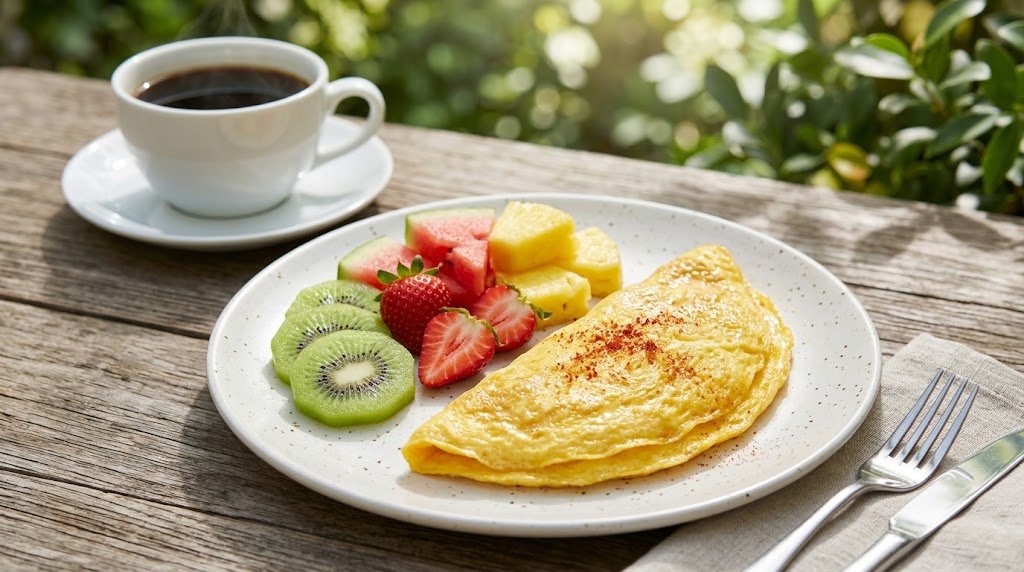
Omelette and Fruit Breakfast: Light, Fresh 15-Min Plate
Some breakfasts feel like a rush, and some feel like a small treat. A soft folded omelette beside a colorful pile of fresh fruit, with a cup of black coffee at the side, sits firmly in the second group. It takes about 15 minutes, uses simple ingredients, and looks like something you’d be served at a sunny hotel terrace.
This guide to an omelette and fruit breakfast shows you how to cook a tender, lightly golden omelette, how to choose and cut the fruit, and how to put the whole plate together. It’s a simple fluffy omelette paired with fresh fruit, and it suits slow weekends as much as busy weekdays.
Why This Plate Works
The appeal here is balance. The omelette brings savory warmth and protein. The fruit brings sweetness, juice, and a bit of acidity. Together they make a plate that feels satisfying without being heavy.
- Quick. The omelette cooks in about 4 minutes, and the fruit needs only cutting.
- Flexible. You can swap any fruit based on the season.
- Colorful. The mix of red, green, and yellow makes the plate look appealing before you take a bite.
- Easy to scale. Cook one omelette for yourself or several for a family brunch.
It’s one of the easiest light morning breakfast ideas to keep in your routine.
Ingredients
Serves 2.
For the omelettes
- 4 large eggs
- 1 tablespoon (15 ml) whole milk
- ¼ teaspoon salt
- 2 teaspoons (10 g) unsalted butter
- ¼ teaspoon sweet paprika (or cinnamon, for a slightly sweeter finish)
For the fruit plate
- 2 ripe kiwis (about 140 g), peeled and sliced into rounds
- 200 g strawberries, hulled and halved
- 200 g watermelon, cut into thick wedges
- 160 g fresh pineapple, cut into chunks
To serve (optional)
- Black coffee or tea
Nutrition Facts by Ingredient
| Ingredient | Amount | Calories (kcal) | Protein (g) | Fiber (g) | Main Nutritional Value |
|---|---|---|---|---|---|
| Large eggs | 4 | 288 | 25.2 | 0 | Protein source |
| Whole milk | 1 tbsp (15 ml) | 9 | 0.5 | 0 | Small amount of protein and calcium |
| Unsalted butter | 2 tsp (10 g) | 72 | 0.1 | 0 | Fat for cooking and flavor |
| Sweet paprika | ¼ tsp | 2 | 0.1 | 0.3 | Flavor and color |
| Kiwi | 2 (140 g) | 84 | 1.5 | 4.1 | Fiber and vitamin C |
| Strawberries | 200 g | 64 | 1.4 | 4.0 | Fiber and vitamin C |
| Watermelon | 200 g | 60 | 1.2 | 0.8 | Hydration and natural sugars |
| Pineapple | 160 g | 80 | 0.8 | 2.2 | Natural sugars and vitamin C |
| Total for the whole recipe | 659 | 30.8 | 11.4 | ||
| Per serving (÷ 2) | 330 | 15.4 | 5.7 |
Values are approximate and vary by brand, size, and preparation. This information is for general reference and is not medical or dietary advice.
Choosing the Best Ingredients
Eggs
Fresh eggs at room temperature blend more smoothly and cook more evenly. If you’ve just taken them out of the fridge, let them sit in a bowl of warm tap water for five minutes.
Fruit
Choose fruit that’s ripe but still firm enough to hold its shape when sliced.
- Kiwi: It should give slightly when pressed gently. Rock-hard kiwis are sour.
- Strawberries: Look for deep red color and fresh green tops. Avoid any with soft or moldy patches.
- Watermelon: A heavy, symmetrical melon with a creamy yellow spot where it rested on the ground is usually sweet.
- Pineapple: It should smell sweet at the base and feel slightly heavy for its size.
The Pan
A nonstick skillet about 8 to 10 inches (20 to 25 cm) wide is ideal. Because this omelette is thin and folded in half, a pan that isn’t too small gives it room to spread.
Step-by-Step Instructions
1. Prepare the fruit first
Wash everything under cool running water. Slice the kiwis, halve the strawberries, and cut the watermelon and pineapple into pieces. Arrange the fruit on two plates, leaving space for the omelettes. Doing this first lets the eggs go straight from the pan to a plate while they’re warm.
2. Whisk the eggs
Crack 2 eggs into a bowl for each omelette, or all 4 into a larger bowl. Add the milk and salt. Whisk with a fork for 20 to 30 seconds until the yolks and whites are fully combined and the mixture looks slightly frothy.
3. Heat the pan
Place your skillet over medium-low heat. Add half the butter and swirl until it melts and coats the surface. The butter should foam gently, not brown.
4. Cook the first omelette
Pour in half the egg mixture, tilting the pan to spread it into an even layer. Cook for about 1 minute, until the edges begin to set. Use a spatula to gently pull the edges toward the center, letting uncooked egg flow underneath.
5. Season and fold
When the top looks mostly set but still a little glossy, sprinkle on a pinch of paprika. Fold the omelette in half with the spatula, press lightly, and cook for another 30 seconds.
6. Slide onto the plate
Slide the omelette onto the plate beside the fruit. Repeat with the remaining butter and eggs. Serve right away, with a cup of coffee or tea.
Tips for a Fluffy, Tender Omelette
Keep the heat gentle. Medium-low heat gives a soft, pale-yellow omelette. High heat makes it rubbery and brown.
Don’t overbeat. Whisk just until combined. Too much whisking can create a spongy texture.
Add a splash of milk or water. It creates a little steam that helps the omelette stay tender.
Use a spatula that fits. A thin silicone spatula slides under the egg without tearing it.
Season at the end. A light dusting of paprika or cinnamon on top gives color and aroma without affecting the texture.
Cook eggs thoroughly. Eggs should be cooked until the whites and yolks are firm, reaching an internal temperature of 160°F (71°C). This matters most for children, pregnant people, and older adults.
Fruit Prep Tips
Cut fruit just before serving. Strawberries and kiwis lose juice and firmness when cut too early.
Keep the pieces uniform. Similar sizes look neater and are easier to eat.
Chill the fruit. Cold fruit tastes more refreshing next to a warm omelette. Keep melon in the fridge until you’re ready to cut it.
Add a squeeze of lime. A little citrus juice lifts the flavor of the fruit and keeps it looking bright.
Wash your tools. Always use a clean board and knife for fruit, especially after handling raw eggs.
Easy Variations
- Cheese omelette: Sprinkle a spoonful of grated cheese over the omelette before folding.
- Herb omelette: Add chopped chives, parsley, or dill to the eggs.
- Sweeter style: Use cinnamon instead of paprika and drizzle a little honey over the fruit.
- Different fruit: Try melon, mango, blueberries, grapes, or orange segments.
- Add a side: Serve with a slice of whole wheat toast or a spoonful of plain yogurt.
- Dairy-free: Use olive oil in place of butter and skip the milk.
- Savory fillings: Add sautéed mushrooms, spinach, or tomato slices for a heartier plate.
Storage and Make-Ahead Tips
Omelettes are at their best when fresh, but a few parts of this meal can be prepared in advance.
- Fruit: Store cut fruit in airtight containers in the fridge for up to 2 to 3 days. Keep strawberries and kiwi separate from the juicier melon so they don’t get soggy.
- Omelettes: Cool and refrigerate within 2 hours, then keep for up to 3 days. Reheat gently in a pan or microwave until steaming hot (165°F / 74°C).
- Food safety: Cut melon should not sit at room temperature for more than 2 hours, or 1 hour in hot weather.
- Meal prep: Cut the fruit the night before and whisk the eggs in a sealed jar. In the morning, pour and cook.
Serving Ideas
A cup of black coffee or tea completes the plate. For a bigger brunch, add toast, a bowl of yogurt, or a small glass of fresh juice. If you’re serving a group, arrange the fruit on a large platter in the middle of the table and cook omelettes in batches so everyone eats while they’re hot.
Conclusion
An omelette and fruit breakfast is a reminder that a good morning meal doesn’t have to be complicated. A simple, soft omelette cooked over gentle heat, plus a handful of fresh, ripe fruit, is enough to make a plate that is quick, colorful, and satisfying.
Prepare the fruit first, keep the heat low, and serve everything right away. Once you know the routine, it’s an easy, repeatable breakfast for any day of the week.
FAQ
1. How many eggs should I use per omelette?
Two large eggs make a thin, tender omelette that folds easily in a 8 to 10-inch pan. Use three eggs for a thicker, more filling omelette.
2. Why is my omelette tough or rubbery?
The heat was probably too high, or the eggs cooked for too long. Cook over medium-low heat, take the omelette off as soon as it’s set, and remember that it keeps cooking for a moment on the plate.
3. Can I prepare the fruit the night before?
Yes. Cut it, store it in airtight containers in the fridge, and eat it within 2 to 3 days. Strawberries and kiwi are best cut the same day, because they soften and release juice when stored too long.
4. Which fruits go best with an omelette?
Juicy and slightly tart fruits work well, such as kiwi, strawberries, pineapple, orange, and melon. Berries and grapes are also easy choices, since they need very little preparation.
5. Are the nutrition values exact?
They are estimates based on average values for each ingredient. The numbers change depending on brand, fruit size, and how much oil or butter you use. Check your own labels if you need precise figures.



One Comment