
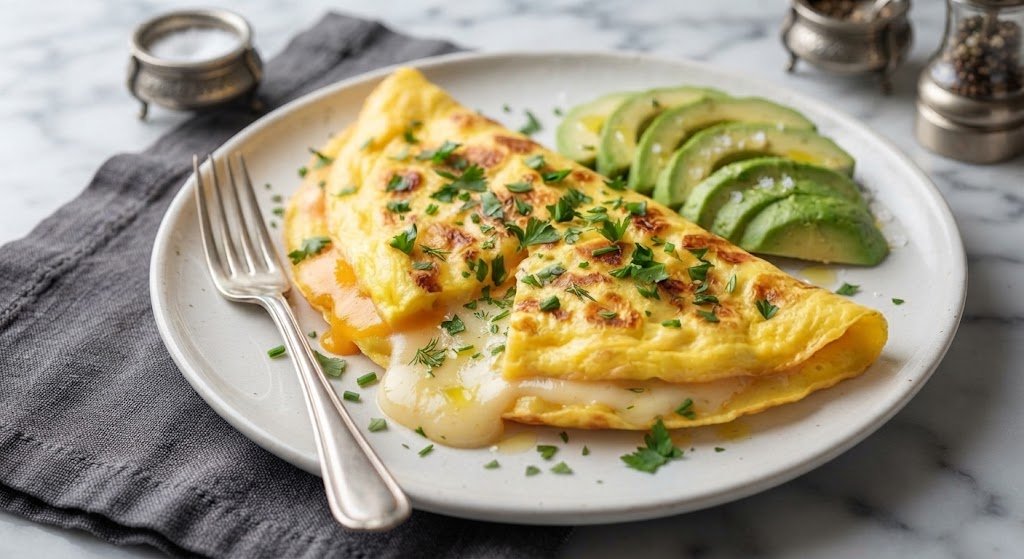
Cheese Omelette with Avocado: Fluffy 10-Minute Breakfast
A good omelette is one of the quickest ways to feel like you’ve made a real breakfast. It cooks in minutes, it uses ingredients you probably already have, and when it’s done right it comes out soft and tender with a golden skin and a molten cheese center. Add a few slices of creamy avocado on the side and you have a plate that looks like it came from a café.
This guide to a cheese omelette with avocado covers everything: the right pan, the right heat, how to fold without tearing, and how to keep the avocado fresh. It’s an easy breakfast omelette you can make on a rushed morning, and it works just as well for a relaxed weekend brunch.
Why This Breakfast Works
The combination is simple, and it works for a reason. Eggs and cheese are savory and rich. Avocado adds a cool, buttery contrast. A sprinkle of fresh parsley brings a little color and freshness.
It’s also practical:
- Fast. Each omelette cooks in about 4 minutes.
- Filling. Eggs, cheese, and avocado together make a satisfying high protein breakfast.
- Flexible. You can swap the cheese, add vegetables, or change the herbs.
- Beginner-friendly. Once you learn the heat control, it’s very hard to get wrong.
Ingredients
For the omelettes
- 6 large eggs
- 2 tablespoons whole milk (or water)
- ¼ teaspoon salt
- Freshly ground black pepper
- 1 tablespoon (14 g) unsalted butter, divided
- ½ cup (56 g) shredded cheddar or a cheddar and mozzarella blend
- 1 tablespoon finely chopped fresh parsley
For serving
- 1 medium ripe avocado (about 150 g of flesh), sliced
- A squeeze of lemon or lime juice
- Pinch of salt and pepper
Nutrition Facts by Ingredient
| Ingredient | Amount | Calories (kcal) | Protein (g) | Fiber (g) | Main Nutritional Value |
|---|---|---|---|---|---|
| Large eggs | 6 | 432 | 37.8 | 0 | Protein source |
| Whole milk | 2 tbsp (30 ml) | 19 | 1.0 | 0 | Small amount of protein and calcium |
| Unsalted butter | 1 tbsp (14 g) | 102 | 0.1 | 0 | Fat for cooking and flavor |
| Shredded cheddar | ½ cup (56 g) | 225 | 14.0 | 0 | Protein and calcium |
| Avocado | 1 medium (150 g flesh) | 240 | 3.0 | 10.1 | Healthy fats and fiber |
| Fresh parsley | 1 tbsp (4 g) | 1 | 0.1 | 0.1 | Fresh flavor and color |
| Total for the whole recipe | 1,019 | 56.0 | 10.2 | ||
| Per serving (÷ 2) | 510 | 28.0 | 5.1 |
Values are approximate and vary by brand, size, and preparation. This information is for general reference and is not medical or dietary advice.
Choosing Your Ingredients
Eggs
Use fresh large eggs at room temperature if you can. They whisk more evenly and cook more gently than ice-cold eggs. Three eggs per omelette is the ideal amount for an 8-inch pan, so you get a thick omelette that folds neatly.
Cheese
Sharp cheddar gives the most flavor, and a bit of mozzarella adds stretch. Grate the cheese yourself when you can. Pre-shredded cheese usually contains anti-caking starch, which melts less smoothly. Gruyère, Monterey Jack, and Swiss are also excellent.
Avocado
A ripe avocado should yield slightly when you press it near the stem. If it feels rock hard, it needs a few more days. If it feels mushy, it’s overripe. Slice it right before serving so it stays green.
The Pan
A nonstick skillet about 8 inches (20 cm) across is the best tool for a 3 egg omelette. A larger pan spreads the eggs too thin, and a smaller one makes a thick, hard-to-fold result.
Step-by-Step Instructions
1. Whisk the eggs
Crack 3 eggs into a bowl for the first omelette, or all 6 into a larger bowl and ladle out half later. Add the milk, salt, and pepper, and whisk with a fork for about 30 seconds, until the mixture is uniform and a little frothy. Don’t overbeat, or the texture can turn rubbery.
2. Heat the pan
Place the skillet over medium heat and add half of the butter. Let it melt and foam, then swirl to coat the surface. The butter should sizzle gently but not turn dark.
3. Pour in the eggs
Pour in half of the egg mixture. Let it sit for about 10 seconds, until the edges just begin to set.
4. Stir and set
With a silicone spatula, gently pull the set edges toward the center while tilting the pan so the liquid egg runs underneath. Do this for 20 to 30 seconds, then stop and let the omelette cook undisturbed for another minute.
5. Add the cheese
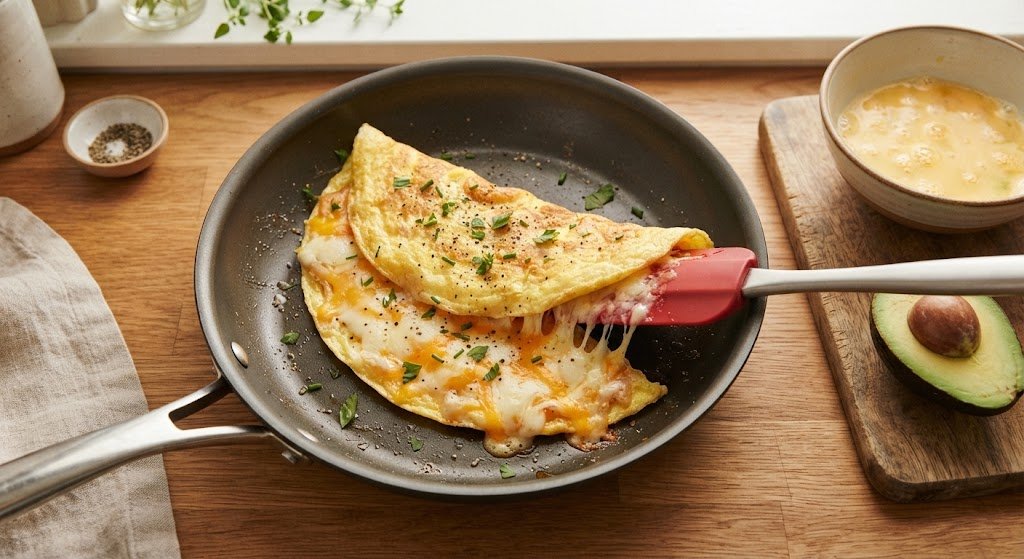
When the top is mostly set but still looks slightly glossy, scatter half of the cheese over one side of the omelette. Cover the pan with a lid for 30 seconds if you want the cheese to melt faster.
6. Fold and finish
Use the spatula to fold the empty side over the cheese. Let it cook for another 30 to 45 seconds. For the golden-brown surface you see in bakery-style photos, raise the heat slightly for the last minute and let a few spots color. Slide the omelette onto a warm plate.
7. Repeat and serve
Wipe the pan, add the remaining butter, and repeat with the rest of the eggs. Sprinkle with parsley, and serve with sliced avocado, a squeeze of lemon, salt, and pepper.
Tips for a Fluffy Cheese Omelette
Control the heat. Medium to medium-low is the sweet spot. High heat makes the bottom brown before the inside sets and gives you a tough texture.
Add a splash of liquid. Milk or water creates steam in the pan, which helps the omelette puff slightly.
Don’t overfill. Too much cheese or too many extras make it hard to fold. Aim for a thin, even layer.
Use a spatula, not a fork. A flexible silicone spatula lifts and folds the omelette without scratching the pan or tearing the eggs.
Salt carefully. Add salt just before cooking. Salting too early can thin the eggs.
Warm the plate. A warm plate keeps the cheese molten while you assemble the rest.
Cook the eggs through. For food safety, eggs should be cooked until the whites and yolks are firm. The safest target is an internal temperature of 160°F (71°C), especially when cooking for children, older adults, or pregnant people.
Easy Variations
- Veggie omelette: Sauté spinach, mushrooms, or sliced bell pepper first, then add them with the cheese.
- Herb version: Replace the parsley with chives, dill, or basil.
- Spicy kick: Add a pinch of chili flakes or a few slices of jalapeño.
- Ham or bacon: Fold in a spoonful of diced ham or crumbled cooked bacon.
- Different cheese: Try feta and spinach, goat cheese and herbs, or smoked Gouda.
- Dairy-free: Use olive oil, plant-based milk, and a dairy-free melting cheese.
- Loaded avocado plate: Top the avocado slices with chili flakes, everything bagel seasoning, or a drizzle of olive oil.
Storage and Make-Ahead Tips
An omelette tastes best fresh, but you can prepare it ahead if you have to.
- Refrigerator: Cool the omelette quickly and store it in an airtight container for up to 3 days.
- Reheating: Warm it gently in a skillet or microwave until steaming hot (165°F / 74°C). Add a splash of water to the dish before microwaving to keep it from drying out.
- Freezer: Cooked omelettes can be frozen for up to 1 month, but the texture becomes slightly firmer. Wrap each one tightly.
- Avocado: Don’t store sliced avocado for long. Cut avocados brown within hours. Squeeze lemon over the cut surface and keep it in a sealed container for up to a day. Better still, slice it fresh.
Serving Ideas
This plate pairs well with toast, a handful of cherry tomatoes, or a small salad. For a heartier brunch, add roasted potatoes or a side of fruit. A cup of coffee or tea completes it.
Conclusion
A cheese omelette with avocado shows how much flavor you can get from a few basic ingredients. Gentle heat, a well-whisked egg mixture, and a quick fold are all it takes to make a fluffy, golden omelette with a melted cheese center.
Master the timing once, and you’ll have a reliable high protein breakfast that works any day of the week. Try the variations, adjust the cheese and herbs to your taste, and make it your own.
FAQ
1. How many eggs should I use for one omelette?
Three large eggs is the standard for an 8-inch skillet. Two eggs makes a thinner, lighter omelette, and four makes a thick one that is harder to fold.
2. Why is my omelette rubbery?
Usually the heat was too high, or the eggs were cooked for too long. Cook over medium to medium-low heat and remove the omelette as soon as it is set, since it continues cooking from residual heat.
3. Should I add milk to the eggs?
It’s optional. A small splash of milk or water makes the omelette a little softer and more tender. Too much liquid makes it watery, so keep it to about 1 tablespoon per 3 eggs.
4. How do I stop avocado from turning brown?
Slice it right before serving and squeeze lemon or lime juice over the cut surfaces. If you need to store half, leave the pit in, cover tightly, and refrigerate for up to a day.
5. Can I make omelettes ahead for the week?
Yes. Cooked omelettes keep in the fridge for up to 3 days and reheat well in a skillet or microwave until steaming hot. For the best texture, though, cook them fresh.






One Comment